
Translated material
Spreading tentacles: how the FSB is gaining a foothold on the periphery, strengthening control and protecting Hyperborea
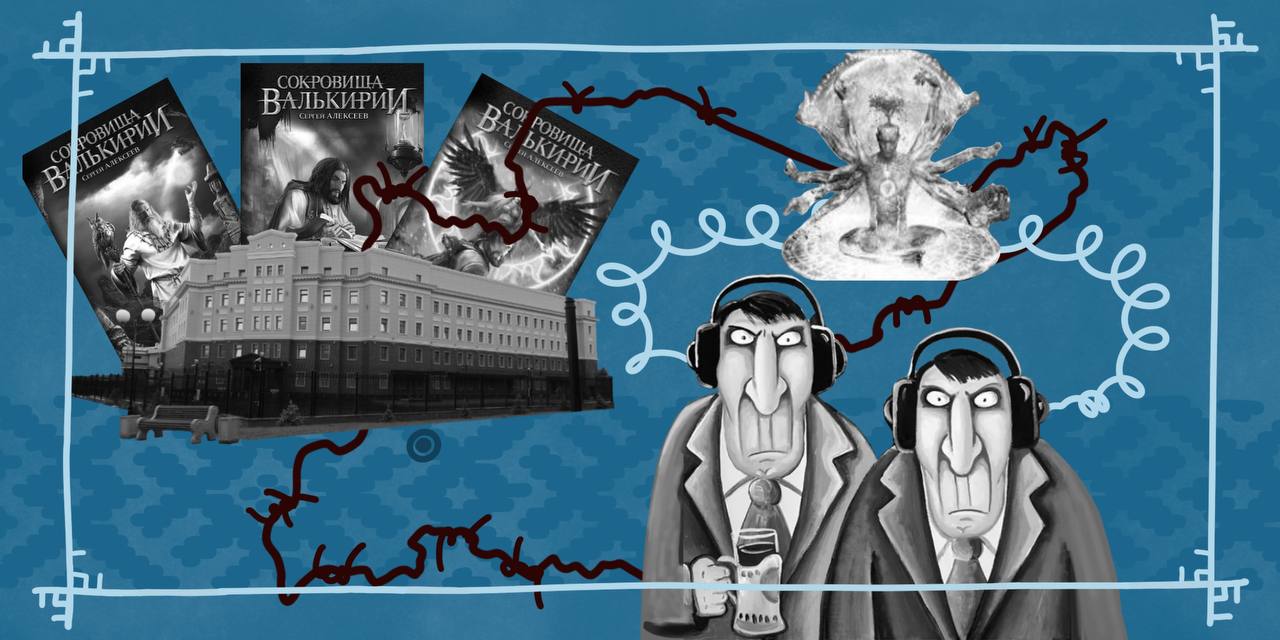
The Russian Internet is changing rapidly: blocking is becoming the norm, access to services is becoming unstable, and control over traffic is increasing. Since 2026, authorities have been able to, if necessary, turn off communications and manage the network manually, often at the request of law enforcement agencies. Against this background, the version is increasingly heard that the FSB plays a key role in these processes .
This transformation is noticeable not only in laws and communication failures, but also in physical infrastructure. Since the mid-2010s, new FSB buildings have been built throughout Russia. What kind of buildings are these, how they function, what they do there, and what the “treasures of the Hyperboreans” have to do with it, we look at the example of the Komi Republic.
Tombstones instead of birches
In December 2013, in Syktyvkar, on the banks of the Sysola, the “Alley of Memory of Afghans” was cut down . In the place where birch trees grew, planted in memory of the fallen soldiers, construction work immediately began, and an impressive fence was installed around it.
Member of the Komi Public Chamber Alexander Popov, who was the first to report what happened in a blog on “7x7” (the blog has now been deleted), addressed his indignation to the city administration.
The event was resonant, but not for the pro-government media of the republic - they ignored it. The Komi branch of the Union of Afghanistan Veterans also remained silent.
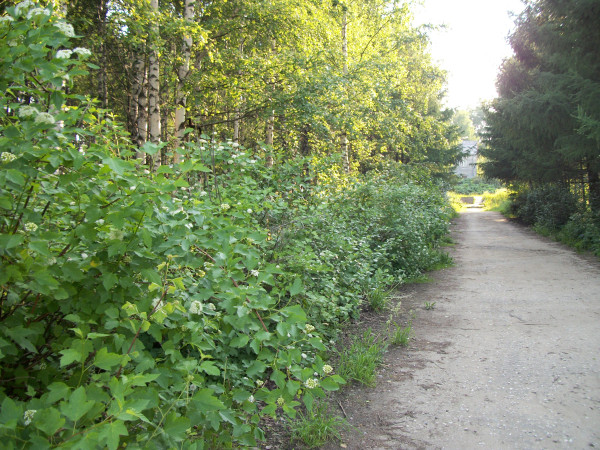
Earlier, in July 2013, city hall officials at a meeting with social activists and journalists spoke about plans to reconstruct Kirov Park and tidy up the embankment, as well as the fact that a new FSB building would appear nearby. Nina Ananina (former surname of Kustova), chairman of Komi Ecologists, recalled that at this place there is a Memory Alley, where each birch tree is planted in honor of a specific fallen soldier. Officials responded that the memorial would not be damaged, and that the new building would be located closer to the river. Six months later, it will become clear that city officials either lied or did not know everything themselves.
Here’s how social activist Pavel Safronov told the publication “7x7” at the end of 2017: “Plans for the construction of this building were made under Zenishchev (Roman Zenishchev, mayor of Syktyvkar from 2006 to 2011 - editor’s note ). He said it would be big and beautiful. I asked him: “What kind of building?” He replied: “I won’t tell” and smiled. Apparently, they planned it when there was still money, federal and FSB funds poured in.”
After cutting down the “Alley of Memory of Afghans,” the memorial had to be reconstructed. In 2023, the administration of Syktyvkar became concerned about opening a new alley in memory of the victims, although it was no longer about the “Afghans”, but about the participants in the war in Ukraine.
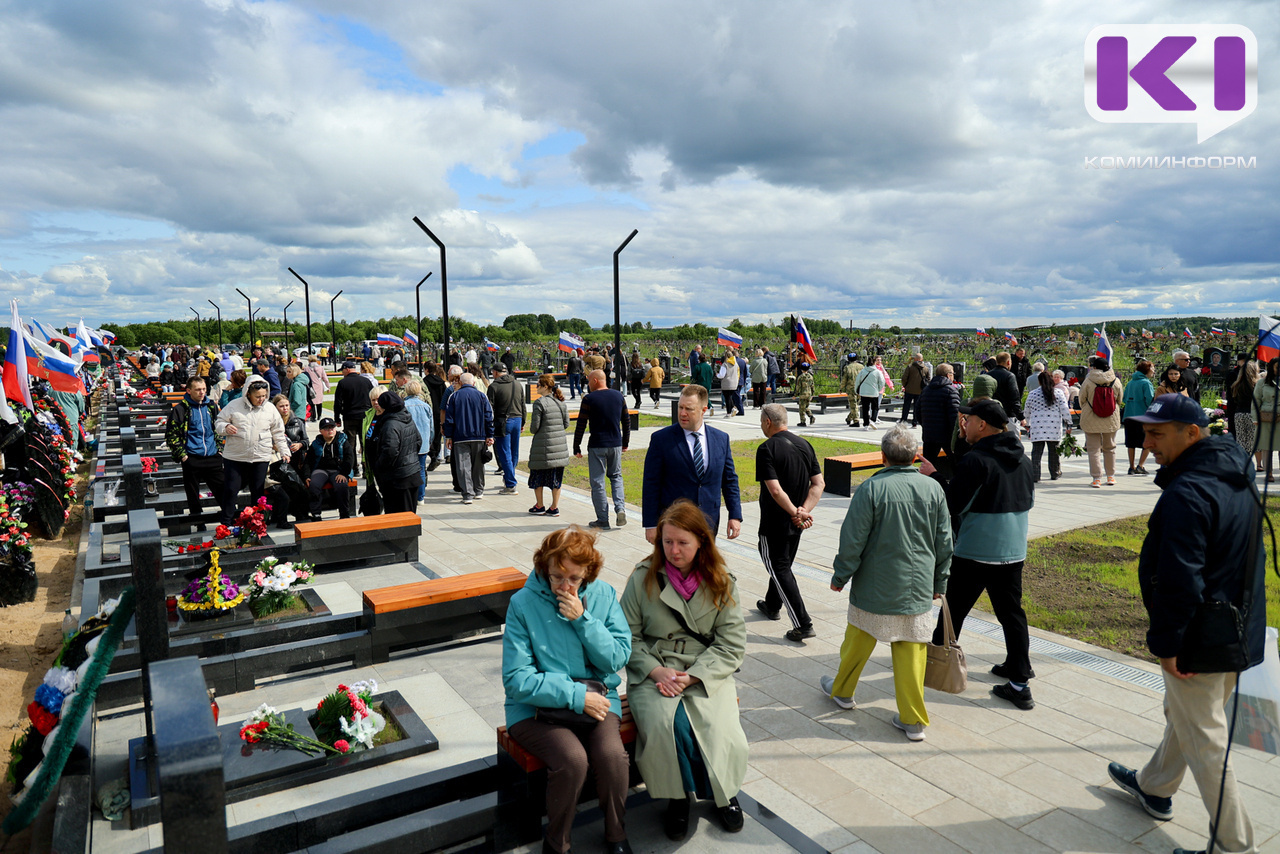
In June 2025, it was solemnly opened at the Verkhnechovsky cemetery. Instead of rows of trees, there are rows of graves. If earlier they tried to perpetuate the memory of the dead with something symbolizing life, and located the memorial closer to the city center, now the soldiers are reminded of by granite tombstones, removed out of sight outside the city limits. Now people must look at the other and remember the other.
Big beautiful buildings
An impressive new FSB building in the spirit of the Stalinist Empire style appeared in Syktyvkar in 2017. Construction proceeded quickly, and although there was no sign on the fence, hung with video cameras, with information about the facility under construction, everyone knew that this was a “house for local security officers.” The construction fence was eventually removed, and instead a fence with “turned peaks” was installed, as the townspeople joked.
It was not clear why such a large-scale intelligence service building was needed in a republic with a population of 850 thousand people (as of 2017) and a serious tendency towards its further decrease.
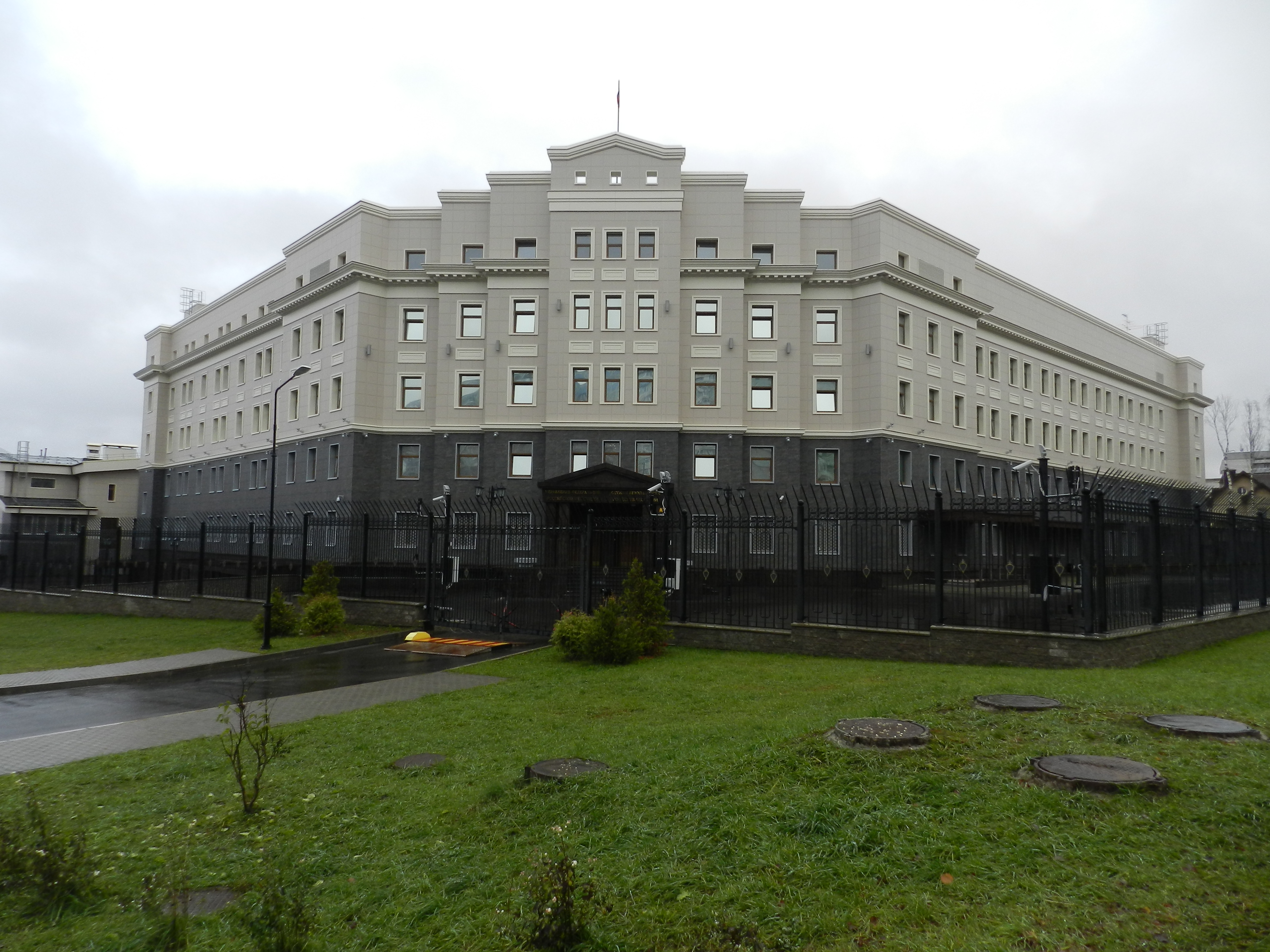
But new FSB buildings, often very similar in style, have appeared in other regional centers of Russia. We are talking about modern complexes designed, among other things, to work with digital data streams. And the modern buildings of the department have common features.
Firstly, this is the location. In 90% of cases, these are historical city centers, often on the site of demolished dilapidated buildings or long-term construction.
Secondly, functionality. These are full-fledged autonomous complexes with their own data centers, underground parking and sports infrastructure. According to our information, there is a large training complex in the Syktyvkar building.
Thirdly, the architectural style. In addition to references to the Stalinist Empire style, the buildings are still distinguished by a more modern appearance, the use of porcelain stoneware and massive glazing.
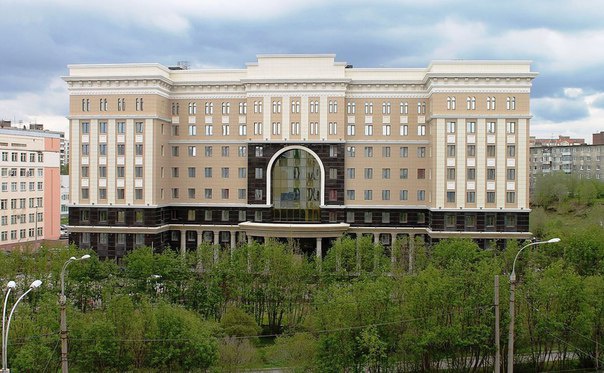
In the news about the grand openings, they are referred to as “new complexes of service and technical buildings of the regional department of the FSB of Russia.”
List of new FSB buildings (2015–2025)
| Murmansk | Lenin Ave., 64 | 2016 | One of the largest regional buildings (15+ thousand sq. m). Seven-story monumental complex. |
| Syktyvkar | st. Babushkina, 1 | 2017 | A five-story building that completed the formation of a departmental quarter in the center. It stands out for its classical architecture. |
| Yakutsk | st. Dzerzhinskogo, 6 | 2017 | High-tech complex. In addition to offices, it includes a large sports area and a specialized shooting range. |
| Simferopol | st. Fedotova / Franko Blvd. | 2017 | Built in a short time to accommodate the Administration for the Republic of Crimea and the city of Sevastopol. |
| Tula | st. Sovetskaya, 13 | 2018 | A modern project integrated into the dense historical development of the city center. |
| Petrozavodsk | st. Andropova, 5 | 2019 | New building for the FSB Directorate for Karelia. Built in a simple style, consistent with the appearance of a government center. |
| Magadan | st. Embankment of the Magadanka River | 2020 | Built on the site of the famous long-term construction. It became an important architectural update for the city. |
| Nizhny Novgorod | st. Malaya Pokrovskaya | 2021 | Deep reconstruction with the construction of additional buildings. The facade is adapted to the historical context. |
| Samara | st. Pionerskaya / Stepan Razin | 2022 | Large-scale expansion of the complex. The new buildings made it possible to unite units that were previously located in different parts of the city. |
| Orenburg | st. 9 January / st. Embankment | 2024 | A five-story administrative and technical building overlooking the Ural River. Modern finishing and protection systems. |
| Cheboksary | st. Konstantina Ivanova, 24 | 2024 | A five-story complex in the historical center on the embankment. A thematic memorial will be opened nearby in 2025. |
What's inside?
Although detailed drawings of such buildings are not published and are classified as state secrets, an idea of their structure can be obtained from open sources - primarily tender documentation and descriptions of design solutions for “special purpose facilities.” In procurement for the construction and equipment of such complexes, information security systems, special communication nodes and infrastructure for working with data are mentioned . At the same time, the approaches to the design of such objects themselves are largely standardized : modern BIM systems used in Russia involve working with libraries of ready-made components and integrating engineering and communication systems into a single model.
Additionally, the specifics of these buildings are indicated by the requirements for contractors: to work with such objects, licenses from the FSB of Russia are required , which implies access to information constituting state secrets and the use of specialized technical solutions. Taken together, this allows us to speak about the existence of standard architectural and engineering approaches to the creation of such complexes, despite the closed nature of the projects themselves.
In addition, assumptions can be made based on news about buildings for other departments. For example, the news about the opening of a new building of the Ministry of Internal Affairs of the Bryansk region in November 2023 reports the following:
“The facility is equipped with a multi-level security system, and its engineering infrastructure is capable of ensuring the uninterrupted functioning of departments and services... the new building provides everything necessary for the effective work of the team: spacious offices, a large assembly hall. The personnel have at their disposal an excellent material base for conducting classes as part of their service and combat training. Two shooting ranges, including an interactive one, are equipped to the highest standards.”
One has to think that the new FSB headquarters buildings are at least no worse. Here are their characteristic features:
Underground floors
Almost all new FSB buildings have 1 to 3 underground levels. With a high degree of probability, there are communication bunkers, secure server rooms (data centers), autonomous life support systems (diesel generators, water supplies) and special archives.
In addition, underground tiers are often used to accommodate departmental vehicle fleets so that the equipment is not in line of sight.
The underground floors in the Syktyvkar FSB complex were also widely known. The townspeople joked that these dungeons contained torture chambers equipped with the latest technology.
Specific zones
New buildings must have sports blocks: full-size gyms, swimming pools and shooting ranges.
Security meeting rooms are also provided: the walls of such rooms are often lined with special panels that block radio signals (“Faraday cage”) to prevent wiretapping.
In addition, the passage into the building itself is divided into a public area (reception) and a high-security area.
Technical floors
Often, the upper levels of buildings (technical floors) are saturated with antenna systems and electronic warfare/communications equipment, which are hidden behind decorative facade elements or false windows.
Consolidation on the flanks
It is important to note that since the mid-2010s, new complexes of FSB buildings began to appear in different cities, without concentrating only in Moscow or St. Petersburg.
In the 2000s, the Internet traffic control system in Russia was built on a regional principle: the infrastructure was deployed at the level of subjects, and data was processed locally. This model was cheaper and technologically simpler - traffic remained within the region and did not require transmission over long distances.
However, this system began to change. As investigative journalist and editor-in-chief of Agentura.ru Andrey Soldatov notes, with the development of technology, the state began to move to a more complex architecture - not centralized, but distributed.
“If earlier it was impossible, roughly speaking, in Moscow to hear what was happening in Komi or the North Caucasus, then new projects began,” says Soldatov.
According to him, the nature of these changes became known, among other things, from leaks of documents from Western equipment manufacturers that supplied solutions for SORM. From these materials it follows that we are not talking about simply transferring control to the center, but about creating a more flexible system where monitoring capabilities are expanded at different levels.
A key element of this transformation is data storage and processing infrastructure.
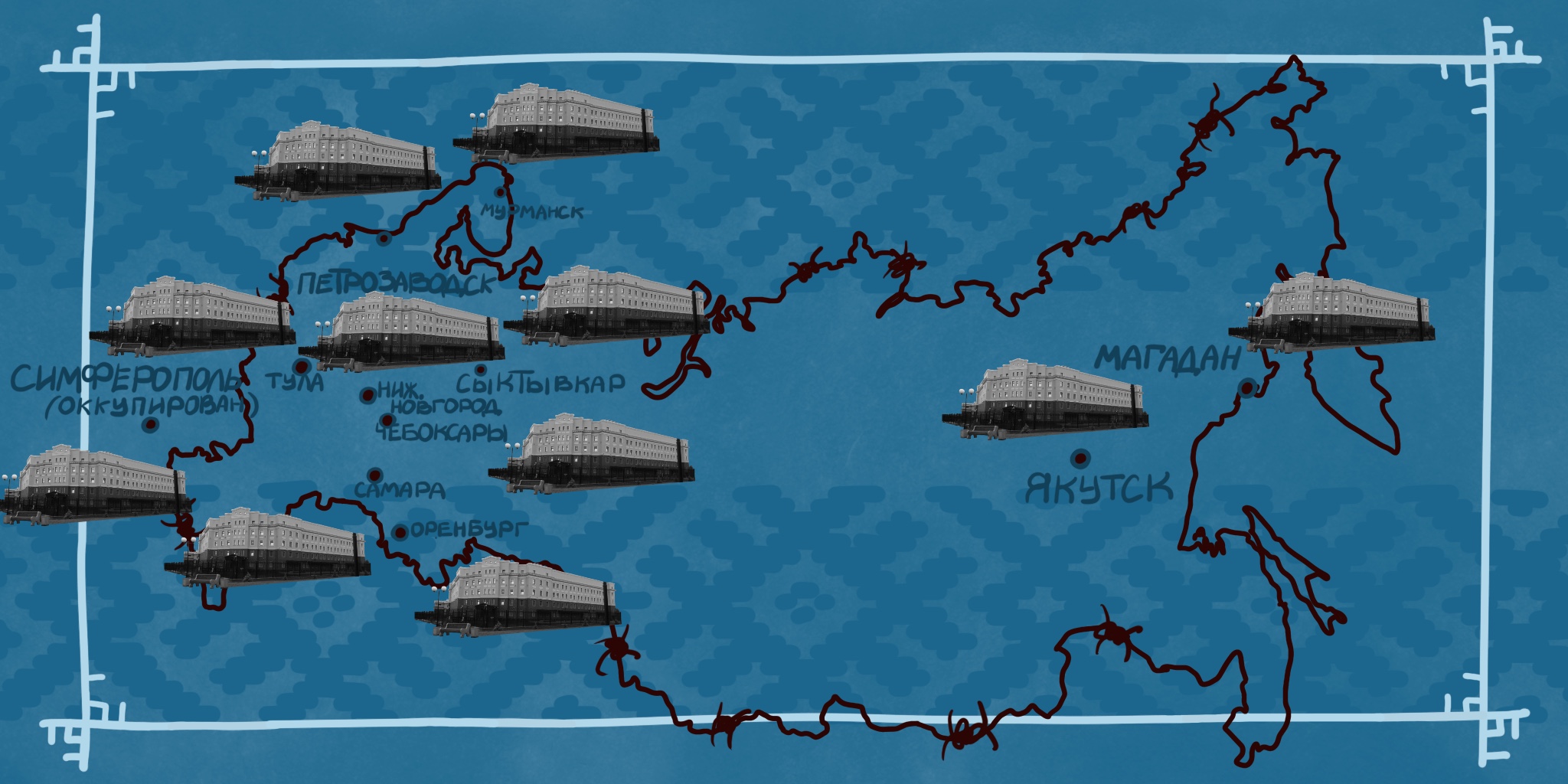
“The main problem is where to store big data. This means we need to build large centers, and they are now being built, in fact, not only in Central Russia. The farther from Ukraine, the better, so that the drone does not fly,” explains the expert.
As a result, a distributed network is formed in which control is not concentrated at one point, but is strengthened locally. This means a growing role for the regional divisions of the FSB of Russia, which gain access to infrastructure and capabilities for working with data directly in their regions.
Thus, in the capital of Komi, according to our sources, there is a technical department responsible for monitoring the Internet, numbering about 50 people.
Not only the Internet
In May 2023, Secretary of the Russian Security Council Nikolai Patrushev came to Komi. The official occasion was a working meeting with the plenipotentiary representative in the Northwestern Federal District Alexander Gutsan and the then head of the republic Vladimir Uyba. The official media wrote about this so briefly and restrainedly that the meeting gave rise to a lot of rumors, both about the imminent resignation of Uiba, and that it was just a cover and in fact, and Patrushev arrived to meet behind the scenes with local representatives of the FSB.
Andrei Soldatov recalls that even when he was director of the FSB, Patrushev gravitated towards large meetings both within the department and with other intelligence services.
“Many things within the FSB are decided within the framework of regional meetings, for example, in this way the areas on which to focus are identified. It’s clear that such things are not advertised,” he says.
According to the expert, starting from 2022, such meetings are about strengthening counterintelligence activities, and this involves operations for which, by default, more equipment is allocated for a longer period.
Something in the work of the regional FSB definitely changed after Patrushev’s arrival. For example, a practice has emerged of arresting people who are not related to Komi, but at the request of the republic. This was the case with sociologist Boris Kagarlitsky, who was taken into custody in July 2023 after a petition from the republican FSB.
Blogger and former TNT presenter Kristina Chernyakhovskaya was arrested in absentia in February 2025, also at the request of the republican intelligence services.
Our sources in Komi suggest that the FSB has special attention to some regions: “They are now looking for enemies of the people everywhere, even in Komi, anywhere. Over the last 8-10 years, our social dynamics have been growing, so they see Komi as a danger. Moreover, here they waved an alternative flag, and organized all sorts of environmental movements, so they look more carefully, stop what seems dangerous to them.”

Mother Hyperborea is calling!
It is obvious that some of the regional FSB centers not only received new large buildings, but were also seriously strengthened technically. The Komi branch also expanded its powers. This picture may seem ominous, but it is quite rational: a distributed system is more stable.
However, the motives for strengthening some regional FSB centers may also be irrational. Here is part of our conversation with Andrei Soldatov:
— Sorry for the idiotic question, but could it be true that such attention to the republican branch is explained by the FSB officers’ belief in certain “places of power” in the Urals?
— This is not an idiotic question at all, an absolutely normal question, because this “Ural theory” is related to the theory of the treasures of civilization. There was such a character, extremely popular in the 90s, writer Sergei Alekseev . And he wrote the Valkyrie Treasures book series. His books were extremely popular among the army and police, and people read him avidly. Their essence was that under the Urals there are gigantic caves in which the very treasures of the Hyperborean civilization are buried in one form or another. And this is the reason why at all times everyone is trying to attack Russia: from the Tatar-Mongols to aliens, Napoleon, Hitler, Ukrainians and so on, everyone is eager for these treasures. Since the idea in his books is always the same, it somehow stuck in the minds of the FSB officers.
— This probably applies to a greater extent to the Komi Republic and the Sverdlovsk region?
— I would say that there are two places in Russia where branding is somewhat more active than in other places: this is your region and the Voronezh region.
— In the Voronezh region, for some reason, local people from the FSB department are firmly convinced that something is buried under them, too. True, we are no longer talking about the Hyperboreans, but about aliens. And when FSB officers say this directly, you are, of course, a little freaked out. But this is one of the reasons why local Cossacks quite actively fought against the oligarchs coming to their region. They believed that the oligarchs would start digging up all sorts of rare metals from them and this would disturb the treasures. And either the aliens will arrive after this, or they will fly away, but something terrible will happen. And all this was with the full support of the local FSB.
“Convenient environment for conspiracy theories”
A religious scholar, who agreed to speak on condition of anonymity, emphasizes that there are no special studies on the views of Russian FSB officers and this environment itself remains “very exotic” for analysis. Nevertheless, according to his assessment, we can talk about a more general phenomenon - the prevalence of conspiracy thinking in closed institutions.
“I did not conduct research among FSB employees and do not pretend to have any expertise. But if we think more broadly, then esotericism is probably not so popular, but conspiracy motives are very common,” he says.
According to him, in this environment a specific effect arises: employees not only encounter conspiracy narratives due to their line of work, but they themselves begin to believe in them. He compares this phenomenon to ouroboros - a snake biting its own tail.
“They often spread conspiracy theories themselves and at the same time become objects of its influence,” the interlocutor notes.
Within this worldview, ideas about the " Dulles Plan ", pseudo-Slavic antiquity, or protracted conspiracies against Russia are common. At the same time, the expert emphasizes, we are not necessarily talking about radical forms like “esoteric fascism.”
He clarifies that among the security forces there is more often an interest in Orthodoxy than in neo-paganism, but this, as a rule, is of a formal nature: “Few of them are sincere pilgrims - this is rather a nominal affiliation.”
Speaking about the reasons, the religious scholar notes that conspiracy thinking is not directly related to the level of education, profession, age or gender. However, it is based on certain psychological attitudes - the tendency to trust unorthodox sources and at the same time distrust generally accepted ones.
“Conspiracy theories are often combined with a sense of social justice. People feel like they are exposing a conspiracy, fighting for the truth, and seeing what others don’t,” he explains.
According to him, many join the intelligence services at a young age, driven by idealistic ideas about service and justice. In this sense, employees can resemble “quixotes” who are sincerely convinced of the significance of their struggle.
“From our point of view, they are fighting with windmills, and from their point of view, they are fighting giants,” says the interlocutor.
At the same time, he adds, the level of humanitarian training plays an important role. In his assessment, in closed departments it is often insufficient.
The religious scholar emphasizes that it is knowledge of history, sociology and political science that allows one to critically perceive such narratives and not fall into the trap of cryptohistory or esoteric interpretations.
As a result, he concludes, the very nature of closed structures contributes to the spread of such ideas: “Any closed system is a very convenient environment for conspiracy theories.”
The development of the regional infrastructure of the FSB shows that control over the Internet in Russia is being built not only as a technical system, but also as part of a larger picture, where the treasures and secret knowledge of ancient civilizations must be protected from greedy invaders attacking Russia from all sides and at all times. Apparently, it is conspiracy theories that allow law enforcement officials to somehow explain to themselves this imposition of total control over the Internet, which is destroying both the economy and the everyday life of millions of Russians.

Text author: Elena Solovyova
The design uses the work of Vasya Lozhkin “The Motherland Hears”