
Translated material
USSR and push-button Nokia: why we are nostalgic for the past
On February 8, 2024, DOXA was added to the register of “undesirable organizations.”
If you are in Russia or planning to return to it, you cannot repost our materials on social networks, link to them or publish quotes.
Read more about what is and is not possible in the cards .
Push-button Nokia, life before VKontakte - it seems that nostalgia for “better times” has become one of the main emotions of our time. Why are we so stuck in longing for the past? Was it really good? And how nostalgia can serve as inspiration for our future. The author of the podcast “Victims of Capitalism” Elya Rey understands this.

Illustrator
Illustrator
Vitya ErshovPublication
June 24, 2026
Nostalgia is not just a trend
From the “my 2016” flash mob to the new wave of Y2K style popularity Abbreviated designation for the year 2000. Also used to denote 2000s fashion. and endless sequels to 2000s films like The Devil Wears Prada, our culture is filled with nostalgia to the point where it can hardly be called a trend. Rather, nostalgia is now a constant and dominant component of our existence; what changes is the details of what we are collectively nostalgic for. Philosopher Fredric Jameson even called the state we live in a “nostalgia mode.”
This mode is so ubiquitous that various companies take advantage of it and have long used nostalgia marketing (or retro marketing) to sell us more new products. Is the fashion of the 2000s back in trend now? Please, here is a list of beauty products “to create a 2000s look.” Do you miss the days of your youth when you were on Tumblr? Microblogging platform and social network founded by David Karp in 2007. , melancholy preserving aesthetic pictures? The Urban Outfitters brand has carefully created a whole page for you with a selection of clothes for such an occasion.
Algorithms from social networks and streaming services like Netflix and Spotify also contribute: because they primarily rely on a lot of data from the past (for example, information about our behavior) to predict our preferences, the picture of the future (what we will watch and listen to) in such services appears to be fixated on repeating patterns.
A culture that evolves like an algorithm “projects a future that is similar to the past,” says technology researcher James Bridle. He argues that these technologies are based on the assumption that nothing will or should radically change or differ from our previous experiences. In other words, they are literally programmed to cultivate nostalgia.
Nostalgia theorist Grafton Tanner calls this a retro-byte , that is, an attractive nostalgic lure that encourages people to express their nostalgic feelings and share them with others. Instagram's first retro filters, reminders of what happened "on this day" years ago, nostalgic playlists, and shows with a 20th-century aesthetic like Stranger Things are all examples of retro bytes.
Naturally, the exploitation of nostalgia does not end with the sale of products and the production of content. “It was better before” has become a powerful political weapon. For example, Donald Trump's most famous slogan, Make America Great Again, aims to evoke nostalgia for a mythical and uncertain period of prosperity as opposed to the supposed decline of today (insert whatever decade suits you, as they say).
Where does nostalgia come from and why do we need it?
The word nostalgia is made up of two Greek words: nostos , meaning “return,” and algos , “pain.” It was coined by the Swiss physician Johann Hofer in 1688 to refer to the desire to return to one's homeland , which was considered an illness at the time. Later this word acquired the meaning of sentimental longing for the past. Nostalgia can be seen as a complex emotion: both the warmth of memories and the melancholy of certain places and times.
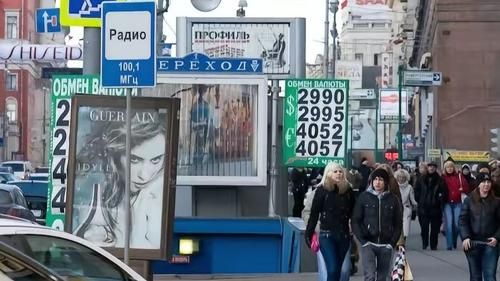
In 1979, sociologist Fred Davis, trying to explain the emergence of nostalgia, put forward the “gap hypothesis.” According to her, nostalgia becomes a response to the uncertainty, fears and anxieties experienced by a person in the present. That is, when people face extreme stress and disorientation caused by sudden changes and crises, nostalgia becomes a refuge from this reality. Another study found that artificially induced negative emotions, including reminders of mortality, increased nostalgia. In other words, one of the functions of nostalgia is to cope with fear.
Nostalgia also helps a person to connect the past, present and future and enhance a sense of meaning in life, as well as strengthen connections with people and feel part of something larger, which plays a positive role in psychological well-being. Not all nostalgia necessarily makes you want to “go back.” Nostalgia can be combined with pain from awareness of the injustice of the past, melancholy for the pleasures experienced and joy at the onset of change.
But it is important to consider nostalgia not only as an individual emotion, but also as a collective one. It can be dangerous: defining the boundaries of groups of people who share common memories (for example, of a certain historical period) and thus excluding those who supposedly do not have access to this collective memory.
How Russians are haunted by a future that never happened
In the modern political and economic context of Russia, nostalgic experiences have become a response to constant uncertainty . People can no longer rely on dreams of a bright and carefree future, seeing what is happening now. Wars , political repression , artificial intelligence , the climate crisis all add to the longing for “simpler times.”
Phenomena such as increased emigration from Russia and a growing sense of broken ties further add fuel to the romanticization of certain periods of “community” in which everything was supposedly better. Remember how Dima Bilan won Eurovision? Or the 2018 FIFA World Cup? Or how Billie Eilish visited Urgant! It was then that Russia was open to the world, and everything was different... Or not?

Such nostalgia often takes the form of anemoi—nostalgia for places and times in which we did not live. Anemoi is often analyzed precisely in the context of melancholy fantasies about what it would have been like to exist in ancient Rome or the Renaissance, that is, in a significantly distant past. But I believe that sometimes anemoeia can also be called a longing for a time in which we may have already actually existed, but could not be aware of what was happening and actively participate in it (for example, in political life) due to our young age. For example, how zoomers are nostalgic for the political nature of the TV series “Give You Youth!”, although they themselves were too young at that time to understand any political references.
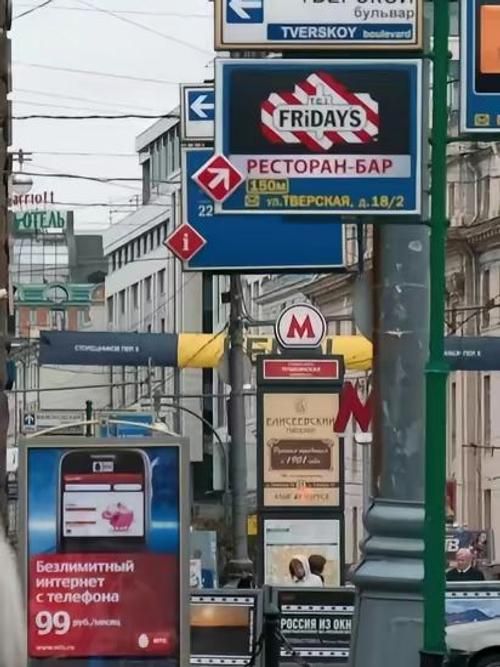
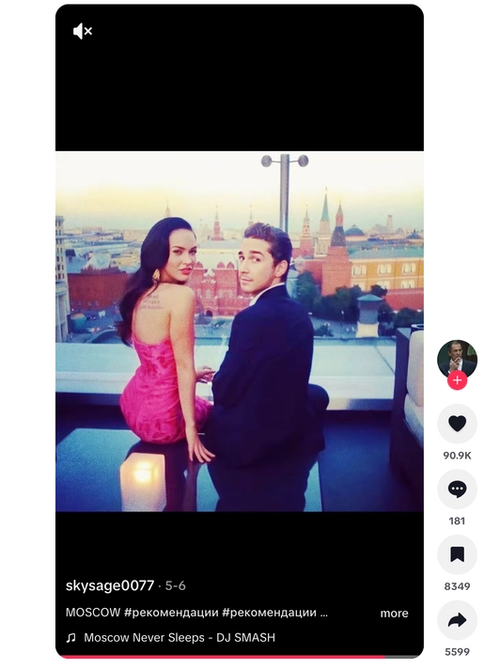
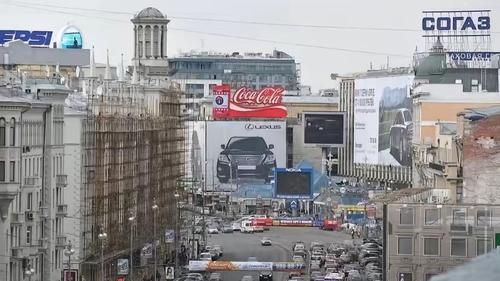
Now you can find content like “a playlist of the 2000s for nostalgia for the aesthetics of freedom,” a selection of photographs “the aesthetics of Moscow in the 2000s,” and a video with a compilation of Western stars who came to Russia, with the song Moscow Never Sleeps in the background. All this can be seen as an example of centrist-liberal nostalgia for the supposedly “free” Russia of the past. In such content, “dollars at 30”, Russia’s participation in Eurovision, the purchase of early Apple technology and neoliberal globalization were that very freedom, or at least its promise in the future.
Considering that the main audience, for example, TikTok, where such trends are cultivated, are users under 34 years of age , such content is aimed more at young people who have a limited understanding of the political and economic life of Russia in the 90s and 2000s. This tendency is built into the way nostalgia works: it is a kaleidoscope of pleasant aspects that distorts and smoothes out a complex picture of the past.
Why are we so stuck in the past?
Perhaps what describes our emotions towards the past even better is hauntology (or hauntology). This word comes from the English haunting (“obsessive”, “pursuing”) and the word “ontology” (the study of being). The term was originally used by philosopher Jacques Derrida . The idea of hauntology was later developed by the philosopher Mark Fisher. He defined this phenomenon as coming to terms with a situation in which culture and politics remain almost unchanged, and hopes for any change in the future disappear.
As a result, our utopian imagination is filled with ghosts of the past. One of the components of such a ghostly culture is, for example, the familiar retromania, or pop cultural preoccupation with what was fashionable in the past.
Fischer explored hauntology primarily through music and cinema. And some of his findings have been further confirmed: for example, in 2012, a group of scientists from Spain conducted a study of the evolution of Western pop music since the 1960s and identified a number of statistical patterns characterizing the general use of pitch, timbre and loudness in musical works. Scientists have confirmed that Western pop music is indeed rapidly becoming the same. This is especially unsurprising given the fact that musicians are forced to adapt to social networking algorithms that make what most people already know and understand go viral.
Another characteristic feature of a ghost culture is the absence of fundamentally new visions of the future. In hauntology, futuristic ideas are always retrofuturistic, that is, they turn out to be simply a rebranding of ideas about the future that appeared in the past. Just think: how is the future currently visualized in popular culture? Most often, futuristic designs are used, invented in the second half of the 20th century.
Just remember the series “Fallout” with its aesthetics of the American 1950s, despite the fact that the events of the series unfold in 2296. Or even films like Substance and Blade Runner 2049 show that the future is still being reimagined through the neon aesthetic of the 80s, which seems not ready to let us go and give space to something new. And these are the very ghosts of the past that haunt us.
According to Fisher, hauntology can only exist under conditions of capitalist realism, that is, in the absence of belief that an alternative to capitalism exists. Surely you have all heard phrases like: “Yes, capitalism has many shortcomings, but humanity has not yet come up with anything better.” This is where the desire to return to the past arises in order to compensate for the lack of faith in the possibility of living differently.
Hauntology can also include melancholic experiences of the history of countries such as the USSR and Yugoslavia. Thus, Vanya Zhigal, a researcher of Eastern Europe and the Balkans, in her article “ Tito, me and acid communism ” talks about a familiar Brazilian Marxist and part-time fan of socialist Yugoslavia, who was not so much nostalgic for this state as saw in its history the ghost of an alternative world order that we never saw.
Simply put, hauntology shows that we are haunted not so much by the past as by a lost vision of the future. A future in which not just the person in power or some problematic aspects of the system from which we want to hide in nostalgia change, but the entire system. Say, instead of nostalgia for the cheaper housing prices of the noughties market, we could imagine a world in which housing is a basic human right and guaranteed to everyone. Can we imagine such a world - not just “like in the USSR” ?
Fischer, reflecting on hauntology, also predicted that our future will belong to populist conservatism (a second Trump presidency and the rise of right-wing populist sentiment in Europe), creative destruction, unlimited business power ( mass layoffs , uncontrolled use of AI ). This is exactly what we are seeing now in the mainstream cultural space. Culture has become hostage to our incapacity for a utopian political imagination.
The right to utopia: how nostalgia can inspire change
Any nostalgia is selective: it does not give us a complete picture of the past, and therefore can be fertile ground for mythologization, misinformation and the replacement of real solutions with illusory promises. Cultural theorist Svetlana Boym, in her book The Future of Nostalgia, describes in detail how such nostalgia, which she calls “restorative,” becomes the emotional basis for the formation of conspiracy theories .
Restorative nostalgia is used by various political forces, but especially actively by the right, as a solution to the crises of our time - often due to the inability to offer any alternative structure of society. “Restorers” accurately identify pain points : for example, it is now difficult to rent an apartment for a reasonable price and find a well-paid job. But the root of the problem for them lies in things like migration (especially of non-white people). And it doesn’t matter that migration has little or nothing to do with these problems in principle (not to mention the fact that there was no time when there was no migration at all).
As a result, the lost “traditional” paradise that the right refers to very often either never existed or is a product of modernity. Because of this, the political use of nostalgia is often condemned as a manipulative tactic, and its positive effects are simply written off. But what if anti-nostalgia is also a mistake?
As philosopher Carolina Flores points out in her article “The Left Can't Leave Nostalgia to the Right,” we are often forced to focus on certain facets of reality at the expense of others in order to highlight information that is valuable to us. Because of this, it may be easier for us to refer to examples from the past or to idealize or simplify them. However, this does not mean that we cannot realize that other facets of this reality also exist. We need to have a clear understanding of what happened in the past: what worked well and what didn't work so well. “Nostalgia can serve as [such] a signpost—that’s where the echo of utopia can be caught,” writes Flores.
This is what researchers Laurajane Smith and Gary Campbell call progressive nostalgia , and Svetlana Boym calls reflective nostalgia. Such nostalgia can take the form of fond memories of social protests, civil rights movements—things that can help mobilize people politically. Geographer Alison Blunt has also highlighted “productive” or “radical” nostalgia, which can motivate people to change existing and seemingly insurmountable structures.
To this day, many feminists (Helen Hester, Sophie Lewis) turn to early Soviet experiments in the field of collectivization of reproductive labor for inspiration and search for alternatives to the patriarchal-capitalist structure. For example, they are studying how life can be arranged in order to avoid the “second shift” for women (so that they are not forced to sacrifice their career for the sake of their family). As paradoxical as it may sound, such nostalgia can be an antidote to hauntology.
We should not delude ourselves that the future can be found somewhere in the past: we cannot go back. And moreover: it is not a fact that we will see there what we expected. But we shouldn’t give up on the emotional support that progressive nostalgia can provide us. As Mark Fisher bequeathed, the lost utopian imagination that will produce for us a new vision of the future can only be found through joy. And that's what nostalgia can give us.