
Translated material
"Accountants benefit from the confluence of schools and kindergartens"
 Photo: Alla Vlaskina/Publicpost
In Moscow for more than a year, a campaign for the merging of schools and kindergartens has been continuing. Who loses and who benefits from enlargement? What awaits Nemassa schools - "correctional" and "for especially gifted"? Why do parents complain about the merger of schools? Is it correct to talk about the levels of education in different schools? Is the right of children and parents violated to the choice of specialized education when creating holdings? Why educate younger students separately from high school students?
On March 12, the next meeting of the Publicpost discussion club was held at the March cafe, dedicated to the reform of education and the merger of schools and kindergartens. The discussion took part:
- Sergey Kosaretsky, Director of the Center for Social and Economic Development of the School of the NISHE;
- Evgeny Bunimovich, Commissioner for Child Rights in Moscow;
- Grigory Kolyutsky, mathematician, laureate of the contest "Young teacher" of the Dynasty Foundation;
- Leonid Perlov, Trade Union "Teacher";
- Alexei Siberus, head of the Mathematics of the boarding school "Intellectual";
- Alexander Kovalji, deputy director of the Lyceum "Second School".
Publicpost was broadcasting a round table .
We post the decoding and video recording of the meeting.
| Who benefits from the merger of schools and kindergartens? |
 Alexander Kovalji:
"First of all, those who developed the concept of reforms win. I think that the highest school of economics plays a very large role. According to my ideas, the development of reforms is worth a lot of money. As we know, this money has been allocated since the beginning of the 2000s-both the Soros Foundation and the World Bank. In my opinion, this is, on the other hand, the management system wins. Because when there are fewer management objects, it becomes much less than the management objects, it becomes much It is easier to manage. "
 Grigory Kolyutsky:
"I want to solidarize with Alexander Kirillovich (Kovaldzhi - approx. Ed.): Of course, the process is very important for those who carry out this process. The continuous process of education reform is fed by those people who generate the development of new reforms. In particular, these people suck if the next reform fails. Because they are given even more money than the development of another failure than for the development previous, no less disastrous.
Secondly, there is generally in the heads of Russian officials such a picture of the world-this is a "vertical of power." And, of course, from the point of view, such a dumb vertical is easier when there are 200-300 directors of large plants, school collective farms. And when there are 2 thousand of them, they can somehow agree with each other-it is much more difficult from the point of view of management, they can already enter into some kind of coalition among themselves. It is clear that the content loses here, since the reformers speak only about managerial schemes, and the content, living school groups, teachers very often do not fit into the schemes. "
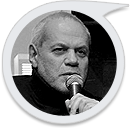 Evgeny Bunimovich:
"To make it more fun and more interesting for us, I will immediately object. I will completely deliberately become the" devil's lawyer. "
Firstly, I want to tell Alexander Kirillovich that when our officials run into all Western funds, on the contrary, I would thank the international speculator Mr. Soros-for several years in a row the teachers received significant grants from him and thereby saved.
Now closer to the question. Let's not deceive ourselves. The average salary of the Moscow teacher has grown strongly in recent years. This is said by a variety of sources. Now, if in 1990 I received $ 5 in terms of $ 5, now almost 2 thousand dollars are salary of a Moscow teacher, well, maybe 1.5 thousand. Another thing is that the teacher is littered with papers, a bunch of requirements, of course, he has a huge load, but reality is that there are no free rates in Moscow schools today.
And one more important point. This is all not invented in the offices. The first association of Moscow schools took place without any offices and Western grants. The 57th school, for example, is one of the strongest schools in Moscow according to the official rating-accumulated several buildings much earlier than the merging camp. About five years ago I was in the same Moscow gymnasium, where there were four schools and two kindergartens - they themselves slowly united. It just did not have the nature of the epidemic, when everyone reports, who was more likely to unite. This happened naturally. There is a good school nearby, and everyone wants to go to this school, and in a neighboring school, of course, the floors are released, because there are no children - and gradually they united. With smart guidance - if classes to end in the same building, with the same teachers - it is not very clear how they will notice the association. It should be a slow, calm, voluntary process for those who need it. And do not pull those who do not need it.
This is the history of all reforms, it is called "Protection from the idiot." Here are people who represent the most famous and strong schools in Moscow, and they do not need to be touched at all. Schools who normally prepare the guys are not clear why they should reform them at all.
And the last one: in all these conversations - I want to remind you as the Commissioner for the Rights of the Child - we are discussing the salary of teachers, whether it became more convenient for directors and so on, but we need to start with another: whether it became better for children. "
 Sergey Kosaretsky:
“Firstly, let's differentiate: talking about reform as a whole, starting from Soros, and what is happening in Moscow are different things. We take specific processes that occur in Moscow. There are difficulties with determining what is happening because the Higher School of the Economics is not familiar (at least) with those documents, programs, objects, expected results and mechanisms of the participation of schools. And we are quite actively sought to participate in the analytical, consultation of the modernization of the capital's education - this is not a secret, not a conspiral version - participated in the development of the state program of the capital's education. schools that should merge.
It is not quite obvious, and who is the initiator of this process. Quite often it is said that many schools merge by voluntary desire that managing councils or director themselves make such decisions. Our center does not have empirical data that would talk about the opposite. We rely on the judgments of parents, teachers involved in this process, but there is no objective picture, and today I can only build versions, why and how this happens. I have two main versions.
The first is that due to the merger, enlargement of schools, it is possible to more effectively provide schools with resources. At the expense of the merger, the school receives more funding, the size of the wages of teachers grow, and more computers, equipment becomes available to students. Because the financing system of Moscow schools is built on a regulatory and subsidiary principle: "Money is following the student." Each student has a certain amount of financing. In this situation, in the most advantageous conditions, large schools find themselves: because they have many children, many funds come to them. Potentially there is a win for teachers, winnings for students are indirectly: they can get teachers more motivated, more access to educational resources. I have no data on how the salaries of teachers in these schools have changed, how the number of computers for one person has changed, so I try to reconstruct this based on a hypothetical scenario.
The second line that I can reconstruct is an opportunity to ensure the equality of access to quality education for children from families with low socio-economic status. This problem has been discussed over the past years. The network of educational institutions in Moscow is differentiated, I would even say, stratified. There are schools in which children from families with a high level of income and cultural capital are studying. There are schools in which children from families with low socio-economic status are concentrated. At the level of plan, perhaps, the process of merging of schools is the task of reducing inequality. Since some schools, let's call them elite, had a selection system, a significant part of the children had practically no chance of getting to individual teachers. Systems with such a strong differentiation of schools and the uniformity of contingents in world practice have very high risks: we have two channels of exit from the general education system - educated children with high chances of education in the best universities and a professional career and poor children, the paths of which are inconsistent. This problem was indicated in the state program for the development of the city of Moscow, and it was proposed to be solved due to the targeted support of those very weak schools, by creating incentives for attracting qualified teachers there, at the expense of the partnership with strong schools, not a merger, but partnerships, and the exchange of experience. The instrument associated with the merger was not proposed. The choice that the Moscow authorities made for me ... I cannot give him an unequivocal assessment now.
World practice gives us rather conflicting assessments. World experience suggests that, on the one hand, in large schools the results of a single state exam - higher. Large schools have more opportunities for the development of personnel potential. Large schools have more opportunities for choosing specialized learning. At the same time, there is another case of research, which draws attention not to a static situation, but to processes. And these studies suggest that during the merger of schools of elite and schools of weak leveling, the quality does not occur. Such studies were conducted abroad, in Russia - not. ”
 Leonid Perlov:
"In my opinion, the question of who has benefited from merger, to the subjects related to school, has nothing to do with school. I have been working at school for more than 30 years, and I can’t say that children in a large school are in more comfortable conditions than children from a small school. Children are more comfortable in their semi -family atmosphere, if I may say so. For example, the optimal size of schools - about 500 children and all these huge complexes there and all these huge complexes there. Now they are disrupt.
What the teachers did not win - I can say this. It was mentioned about the growth of the salary, and in this regard, one of the doctors, who said that there was nothing to live for one salary, has nothing to eat, and two-just once. So, teachers are in this position today. The real load has increased significantly. In my youth, I happened to work 40 hours a week, and at that time it was a good salary, but I did not stand long, being a young man.
I doubt that the directors won. Managing a complex for 2 thousand children is not like managing a school for 500 people. The director automatically turns into a manager, manager and ceases to be a teacher. The pedagogical aspects of his work are transferred from the director to the head teacher, who are engaged in the schedule, the preparation of an infinite number of papers, reporting, planning tariffs and other things, and they also do not need this either. And the teacher, in essence, remains the only teacher at school. And who will determine the pedagogical ideology of the school? It turns out that there is no one.
It turns out that the winners of the winner are probably accountants. Because in recent years I have heard in recent years about increasing the effectiveness of the education system, including the materials developed by the Higher School of the Economics, implies economic and managerial efficiency. The word "pedagogy", in my opinion, was just leaving the vocabulary. In any case, the discussion of this side is simply not conducted. Economic efficiency, managerial efficiency, effective investment, an effective contract of the teacher ... Where are the criteria for effectiveness and who will determine them?
In fact, what we are discussing here today is a discussion of the problems of repairing the third floor in the building in which the foundation collapsed. And the restoration of the foundation in general is not about. "
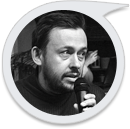 Alexei Sibnev:
"The numbers were not called, but I want to name them, because then it will become much more interesting to say. The official website of the Department of Education states that in 2012 and the beginning of 2013, the merger took place with two thousands of educational institutions. There are not only schools, but also colleges, and kindergartens, and God news, moreover, it turned out to be three times less. About 2 thousand schools, that is, almost all schools mean that this process is about this process, I was going to say, and Sergei Gennadievich (approx. Ed.) Purchased me: no one saw the papers justifying such a serious procedure. In my opinion, a three-page document on the website of the Department of Education, where it is written how to merge.
So, there are no plans, what happens - no one knows. The department in different cases speaks differently, parents say that we will have more computers, they say to teachers: two schools are salt, half the administration is pleased, the money will go to you, teachers. But here it should be noted that in the new wage system no more than 10% of the payment fund can go to the administration. Now imagine, in one school 10%for the administration, in the other 10%, these two schools were leaked, and this united fund for the administration also amounted to 10%. They saved coolly, right? The directors are promised some huge money, apparently that they are silent.
How does this all perceive the middle of the leadership, officials in the districts? Officials do not like to go to schools, they are the main thing - quantitative indicators. Now a very simple indicator has appeared: "merge." If you do not merge, then you do nothing. So what about the fact that you have socially complex children there, and you grow people from them?
And I will tell you how it looks from the point of view of directors. Imagine, the director of Marya Ivanovna is sitting, 60 years old, 20 years old, the director, school as a school, and they say to her: let's merge. Here she sits and thinks: two neighboring schools, familiar to me, in one director - Vika, in another - Katya. If we merge with Vika, Vika is a painfully strong aunt, she has a hand in the department, she will probably break us. Let us merge with Katya, we will break it ourselves. And I cannot even blame this director, because he is put in such conditions for those who are from above. "
| How will the mergers affect children with special needs and will they lead to equality of opportunities? |
Evgeny Bunimovich:
"As a teacher, I understand that, relatively speaking, there is no normal child-everyone has their own problems, but still statistically we can say that there are separate very complex categories. These are children with deviant behavior, for example. And I believe that it is better to invest more money in them than to build prisons and colonies, at least for economic reasons. This is one category. This is one category-children with health problems, and there are also clear children here. The third category-they are more than their education and socialization-they are there, and, by the way, they need to be learned by the Russian language, they must be adapted, they must be socialized. I am starting a conversation with our Department of Education with the fact that we need to build models for these certain categories of children.
Further, as for children with health problems, they have now received double, and some even triple funding, but these are only disabled children. And children with the so -called disabilities, with special problems - both autists and dspeshniki, there are different levels - not everyone has a disability. The fact that they need additional work is obvious. But they, excuse me, do not have a card, because they do not have the status of disabled people, and therefore I cannot achieve additional funding. As for gifted children, they cannot have a “gifted child” card, so how to conduct financing in such a situation is a big and serious problem. When everything is united, an obvious question arises. For example, we have a school of inclusive education, where children with disabilities study with all the children, such experience was about 300 schools and kindergartens among four thousand. These schools are united with others. Will this model be preserved or, conversely, will everything disappear? I want to say that the unification of schools in itself is not bad and not good. Where necessary - it is necessary to unite, where it is not necessary, it is not necessary, this is not the point. But, unfortunately, now everything is filled with general schemes, and maybe the unspoken, but obvious reporting on this unification, instead of reporting on children, is going on. This substitution seems dangerous to me. "
Grigory Kolyutsky:
"Все понимают, что нужно, а вот на практике мне пишет женщина: "Я работаю 15 лет ортопедом в коррекционном ортопедическом саду..." Потом их слили, уволили медсестер ЛФК, массажистку, медсестру бассейна. Был профессиональный ортопедический детский сад, который не просто решал эту проблему особенных детей, но был носителем цехового, ремесленного знания и уникальной школой подготовки кадров. Его не стало. Аналогичная история была еще весной в школе № 539, когда учителя тихо разбегались — там за одну парту посадили аутистов, детей с ДЦП и с синдромом Дауна. Так что мне кажется, что очень важно обсуждать реальную практику".
Алексей Сгибнев:
"У нас в школе сейчас конкурс резко вырос, и нам пишут письма родители из других школ с вопросами: "А вас не сливают? Нашу школу слили, или хотят сливать, мы боимся, мы хотим стабильности, мы хотим в ту школу, которую не сливают". То есть вместо выравнивания образовательных возможностей мы получаем, наоборот, ситуацию, когда на последние островки стабильности все кинутся, и неравенство будет еще сильнее".
Александр Ковальджи:
"Укрупнение — это такая же идея, как раскулачивание, чтобы все были равны. Большевистская уравниловка. Равенство — понятие сложное, равенство должно быть адекватно возможностям и детей, и учителей, и школ. Все находятся в разных условиях. Особенно когда укрупняют сельские школы... Это просто кошмар! Есть практика, когда детей там возят за много километров, и автобусов хватает только на младших школьников, а старшие ходят пешком".
Evgeny Bunimovich:
"Позволю себе две реплики вот какого плана. Есть проблема особых точек. Москва — это Москва, а сельская школа — это сельская школа. Объединение сельских школ — это вообще другой процесс. Не только объединение, а вообще вопрос о сельской школе. Надо понять, что когда дети свозятся в районный центр учиться в интернат, как это сейчас часто делается — есть автобусы, нету, это неважно даже. Дело в том, что дети обратно уже не возвращаются никогда. Поэтому это вопрос вообще не образования и не Минобразования, а это проблема российской территории. Если Россия хочет, чтобы оставалась деревня, там должна быть школа. Она безумно дорогая, потому что там 10 детей и 5 учителей, но если ее не будет, то не будет и этой самой деревни. Это надо хорошо понимать. Это первый момент.
Я забыл сказать еще об одной категории. Обратите внимание, в последнее время — не буду обсуждать, почему — все заговорили о сиротах. Когда речь идет о сиротских учреждениях (о чем я говорил пять лет, но меня никто не слышал), этот нормативно-подушевой принцип финансирования становится чудовищным. Представьте себе не каких-то негодяев, а хороших воспитателей в сиротском учреждении. Если они будут отдавать детей в семьи, как их призывают сегодня все с трибун, и как правильно было бы делать, у них не будет зарплаты".
| Слияние: добровольное или принудительное? И могут ли учителя и родители повлиять на этот процесс? |
Александр Ковальджи:
"Происходит такое экономическое выкручивание рук, когда чиновники всех уровней объясняют директорам, учителям и родителям: вы понимаете, что школа не выживет, что школа загнется, и вы, пожалуйста, добровольно объединяйтесь, иначе вам будет очень плохо. Можно ли такое объединение считать добровольным, даже если удалось убедить директора и родителей? Мне кажется, что вряд ли. Я со многими директорами из разных округов говорил, и это объединение еще проводится какими-то фантастическими методами. Например, мне директора рассказывали, как их вызывают в Управление образования и требуют, чтобы они назначили себе зарплату в три раза больше, чем у учителей в среднем. И мне понятно, зачем это делается. То есть директора надо как бы оторвать от школьного коллектива, чтобы он стал представителем чиновников".
Evgeny Bunimovich:
"Во-первых, официальная позиция Департамента образования очень простая: мы ничего не навязываем, хотите — соединяйтесь, не хотите — не соединяйтесь. Она документально подтверждена. Еще прошлой весной я обратился в Департамент, объяснил, что начинается какая-то кампания, которая вызывает у меня тревогу. На что мне было сказано, что в каждой школе есть Управляющий совет, куда входят родители, старшеклассники, учителя, и мы не будем принимать документы о слиянии, если Управляющий совет школы не согласен с этим. Я этот ответ департамента напечатал в "Новой газете", чтобы все школы знали — только с согласия Управляющего совета. Никаких директивных документов нет, еще раз повторяю. На директоров, допустим, можно влиять. Но Управляющий совет — это уже совсем другая история. Когда речь идет о выборах президента Российской Федерации, можно сказать, что мой голос ни на что не влияет, и там вообще подтасовки. Но когда речь идет о выборах в Управляющий совет школы — это, вообще-то, ограниченное пространство: проконтролируйте, выберете такой Управляющий совет, чтобы он не был карманным! Это вопрос к гражданскому обществу.
Я учитель с более чем 30-летним стажем, и даже был в свое время одним из основателей Ассоциации учителей математики. И я хочу сказать, что самая главная беда нашего образования — это не реформы, а отсутствие образовательного сообщества. Вот приходит новый министр образования. Он встречается с Советом ректоров, с Советом муфтиев, с представителями Православной церкви, с раввинами, с военно-промышленным комплексом, но у него нет собеседника в образовательном сообществе. Нет никакого мощного Союза учителей или директоров, нет этих коалиций.
И если родителей не волнует Управляющий совет школы, в которой учится их ребенок, то тогда действительно можно сделать все что угодно".
Леонид Перлов:
"Да, официальная позиция Департамента: добровольно. И неоднократно она разными людьми, в том числе и начальником Департамента, озвучивалась. Только добровольно и только при наличии письменного согласия Управляющего совета и, кстати, еще и трудового коллектива. Подожгите квартиру, заприте дверь, и человек совершенно добровольно выпрыгнет из окна, независимо от этажа. Что касается конкретных механизмов, они стары, как мир, и придуманы еще в античности: кого-то можно обмануть, кого-то запугать, кого-то просто купить. Один из этих трех механизмов срабатывает".
Алексй Сгибнев:
"По поводу Управляющих советов одна деталь, но очень живописная. Одна мама, член Управляющего совета школы, мне рассказывала, как это выглядит. Значит, их сливали, их почти слили, они писали всем, включая депутатов, Медведева, слияние остановили. На сайте департамента на следующий день написали: рассмотрели заявку школы на слияние и решили ее не сливать. Они бились изо всех сил, их решили не сливать. И я этой маме верю".
Григорий Колюцкий:
"У меня есть радостная новость для всех присутствующих — есть группа на Facebook, называется "No school merge" . Это родители и учителя, которые начали самоорганизовываться в борьбе против объединения школ. Объединения ударили по голове людей, которые раньше не интересовались не то что образовательной политикой, а вообще какой-нибудь политикой. Когда их тюкнуло, они быстро начали учиться и Управляющие советы делать, и обмениваться информацией.
Дальше, важную вещь рассказывал Алексей Сгибнев про Союз школ, который собрал очень много подписей под петицией . Кроме этих подписей, под этой петицией собралось много отзывов о том, как политика слияния проводится по всей стране. Почитать их как фактический материал теоретикам я очень советую".
 Евгений Насыров, эксперт-обозреватель по вопросам образования:
"Это фактически школьная франшиза, такой "Макдоналдс", когда можно под вывеской, например, 57-го лицея или любой другой известной школы, присоединив к ней несколько школ, хотя бы формально снять проблему желающих устроить ребенка в хорошую школу. Люди будут идти в этот огромный холдинг, желая дать своему ребенку самое лучшее в Москве образование. (Ну, и формально они должны его там получить, когда над тем или иным школьным зданием висит табличка, допустим, 57-ой школы.) Если говорить о том, что интересы сильных школ учли, это отчасти так, отчасти нет. Неделю или полторы назад я общался с Юрием Владимировичем Завельским, директором гимназии 1543, и он мне рассказал, что его вызывали в департамент и предлагали взять еще одну школу. На что он сказал, что нет, он взять ее не хочет. Естественно, он очень уважаемый человек, его никто ломать не будет. Но как только Юрий Владимирович перестанет быть директором, видимо, сразу все изменится. Та же самая ситуация, полагаю, с лицеем "Вторая школа" и со всей первой десяткой школ. Школу номер 1, лицей 1535 – присоединили в этом году. Менделевич (директор 57 лицея — прим.ред.) взял еще одно здание тоже, хотя он всем и каждому в интервью говорит, что он этого не хотел.
По моему опыту, никогда слияние не произойдет, если хотя бы 100-200 человек родителей выйдет во двор своей школы с молчаливым протестом. На мой памяти, когда выходили, это слияние либо откладывалось, либо его отменяли.
И еще один важный момент — по поводу того, что говорил Евгений Абрамович, по Управляющим советам. Отдавать такие важные решения, как объединение школ, не одну с другой, а пять школ, три школы, два детских сада, Управляющим советам — это неразумно. Часто эти Управляющие советы карманные, более того, там старшеклассники, там родители, которые только пришли в школу, то есть их состав столь же не отражает реальность, как, допустим, наша Государственная дума. Поэтому сейчас говорить о том, что вся власть — Управляющим советам, и все будет хорошо, если вы сами, дорогие друзья, научитесь управлять свой школой, это вряд ли реально. Наверное, когда-нибудь к этому все должно эволюционным путем прийти, но сейчас эта ситуация невозможна".