
Translated material
Avenged the death of his family
A Russian man lost his wife and children in a plane crash. He tracked down the controller of that flight in Europe and stabbed him to death.
There were no survivors in this tragedy. 71 people were killed when a Russian plane flying to Barcelona collided with a DHL cargo plane. Most of the victims are children. And while the European authorities were looking for those responsible for the disaster, the Russian, who had lost his wife and children, decided to commit lynching. Kaloev's revenge - in the material "Cold" .
Stranger with bad English
In February 2004, a foreigner contacted a Swiss travel agency. He asked to book a hotel room for him near Zurich airport. A few days later, the man checked into the three-star Welcome Inn hotel in the town of Kloten.
The man did not attract attention: he was quiet and spent all his time alone in the room. The only thing the hotel staff remembered him for was his poor English: they had to talk to him slowly so that he had time to understand foreign speech.
On February 24, this tourist had breakfast alone, leafed through brochures advertising excursions, and left the hotel. He headed to the house where the man for whom he flew to Switzerland lived - 36-year-old Peter Nielsen.
Having reached the desired building, the man did not knock on the door. According to The Guardian, he sat on a bench in the garden opposite the front door and waited. The owner of the house, Peter Nielsen, soon noticed that an uninvited guest was sitting on his property. He went out into the garden - followed by his three children running out of the house - and asked the stranger what he needed.
A few minutes later, Nielsen’s wife, who was in the house, called out to her husband, but instead of an answer she heard a terrible scream from the garden. She rushed outside and saw her husband lying in a pool of blood, and the stranger who had attacked him was running away.
When the police arrived, Peter Nielsen was already dead. He was stabbed several times and bled to death.
Swiss police have not released the name of the suspect. Immediately after the murder, the authorities gave only a guideline: they were looking for a man of 50-55 years old, with a stocky build.
Soon the police detained the suspect and reported: he is 48 years old, and in 2002 he lost his wife, daughter and son as a result of a plane crash that was flying from Moscow to Barcelona. The murdered Peter Nielsen worked as a dispatcher at the airport. The tragedy occurred during his shift.
71 people died in the plane crash, of which 52 were children. Later, the name of the detainee became known : he was Vitaly Kaloev from North Ossetia.
See the sea for the first time
Vitaly Kaloev got married when he was almost 35. He said that he started building a family so late because in his youth he was poor: he worked as a foreman at a construction site, his salary was only enough for cigarettes and travel. He didn’t want his wife to “nag” him because of lack of money: “This is necessary, this is necessary, the third is necessary...”
“While his father was alive, he raised four huge bulls for Vitaly’s wedding. The bull grows up, but Vitaly does not marry. But they don’t keep a bull for a long time, the meat will become tough, who will buy it. I had to sell one and raise the next. And so the father sold four bulls,” Vitaly’s brother Konstantin later recalled . — 500 kg each. So the father did not wait. But Vitaly first wanted to get back on his feet. And build a big house. And have a rich wedding. And so that the wife does not need anything. And there wasn’t a girl for a long time that he could get hooked on.”
Kaloev was born into a poor family. His parents raised six children in the difficult post-war period. His mother worked as a kindergarten teacher, his father, a veteran of the Great Patriotic War, taught the Ossetian language at school. Vitaly was the youngest - he recalled that he went to first grade in shorts, a T-shirt and shoes similar to slippers that his mother sewed for him. He amused himself by playing hockey with the neighbor boys - he made sticks from boards that he stole from his father - and alchiki , an old folk game where you throw turned lamb bones.
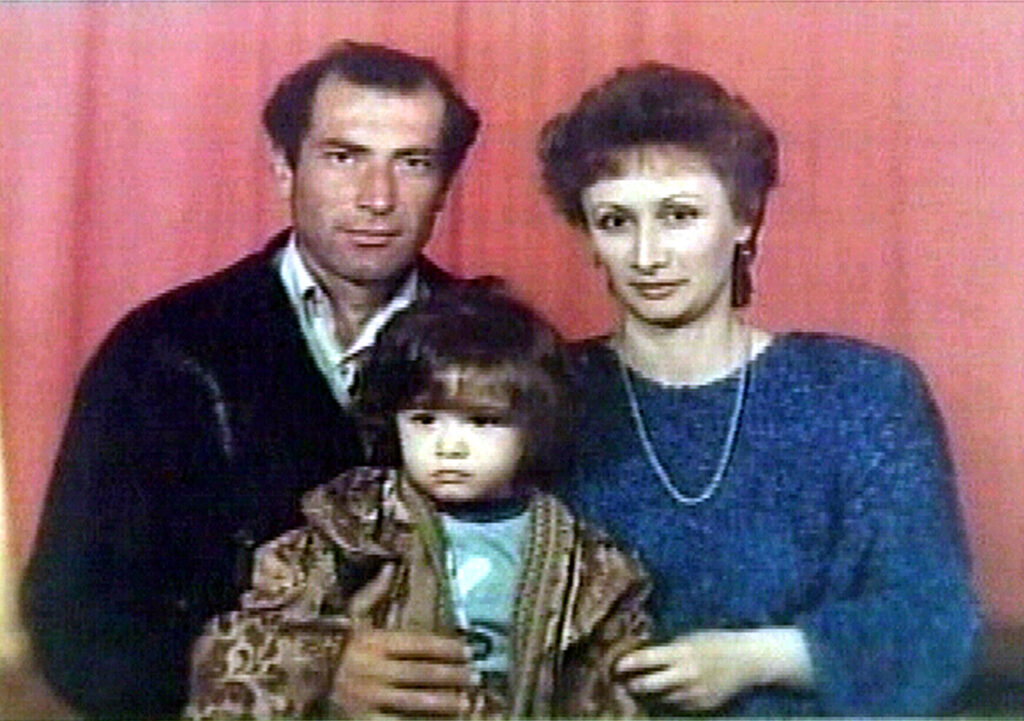
After eighth grade, Kaloev entered a construction technical school, and from there he joined the army. When he returned, he got a job and then studied at the Mining and Metallurgical Institute, Faculty of Construction. Over the years, he began to earn more, gained a reputation in the construction business and decided to open his own business. I came to open an account and met a bank employee named Svetlana. Eight months later they got married.
Kaloev’s career was successful : a large enterprise, contractors, orders. In the family, too, everything went as usual. Svetlana gave birth to two: first a son, Kostya, then a daughter, Diana. Kaloev, as relatives recalled , “idolized” the girl: he called her “my princess.”
In 2000, Kaloev was offered to work in Spain - his friend, for whom he once built a house in Ossetia, moved there and started another construction project. He agreed and went, but left his family in Russia.
In Spain, Kaloyev liked the comfort: it seemed to him that there “everything was done for a person .” After two years of work, Kaloev invited his wife to take the children and come to him. He wanted them to rest: his daughter and son had never seen the sea in their lives.
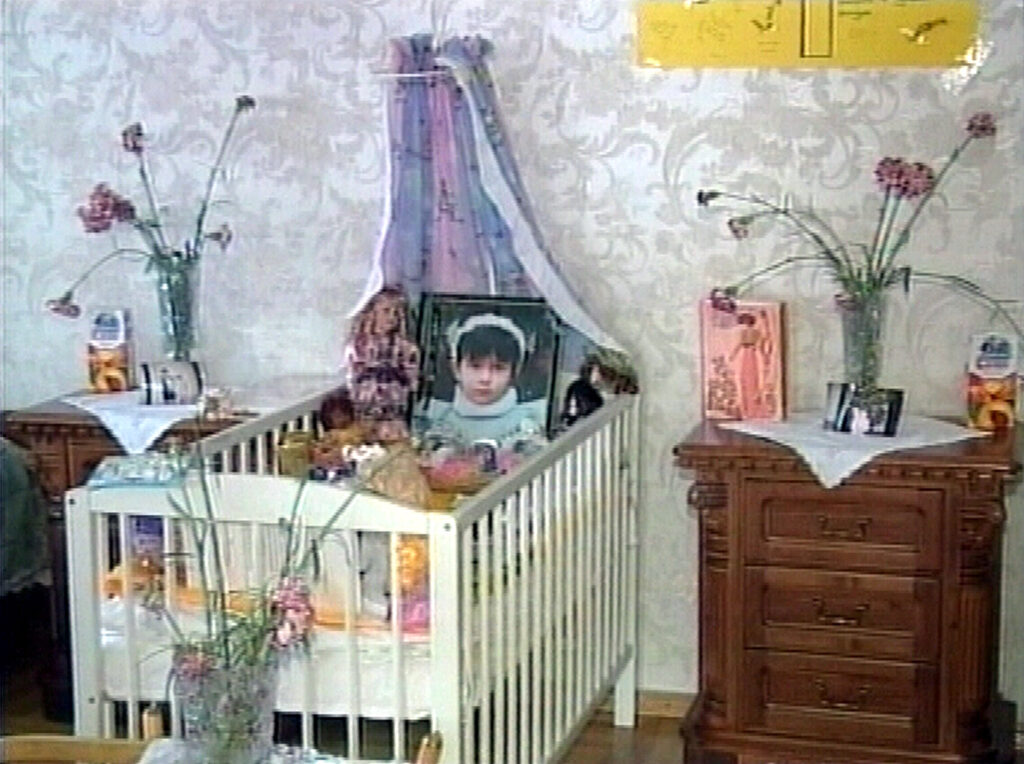
The plane on which Svetlana, her daughter and son flew, was supposed to land in Barcelona on July 1. Kaloev arrived at the airport two hours later. The board said that the flight from Moscow was delayed. But soon the line with information about this flight disappeared completely.
Kaloev recalled that a woman came out to meet the greeters. She said: everyone who is waiting for a plane from Moscow, come with me to a separate room.
"Get down, whore"
In the summer of 2002, students from three of the most prestigious lyceums in Ufa gathered for a vacation in Barcelona. The trip to the Spanish resort was paid for by the administration of Bashkortostan: it was a reward for successful studies for especially outstanding schoolchildren. There were a total of 52 high school students in this group. Their classmates saw them off with envy.
The Ufa residents were traveling through Moscow on vacation: in the capital, the organizers hoped to resolve problems with visas for several trip participants. But in the end, it was not possible to obtain the documents: the leader of the group, Bashkir official Din Khuzhin, his wife and two children were denied a visa by the Spanish embassy. He was very angry - he had been abroad many times. And he decided: he would put the rest of the group on the plane, get his way at the embassy and catch up with the group in Spain. Irina Savchuk, an employee of the republican administration, flew with the schoolchildren.
Dean Khuzhin accompanied the children all the way to border control at the airport. Then, just in case, I called Irina Savchuk on my mobile. She assured her colleague that the children were fine and said goodbye: passengers were called to board.
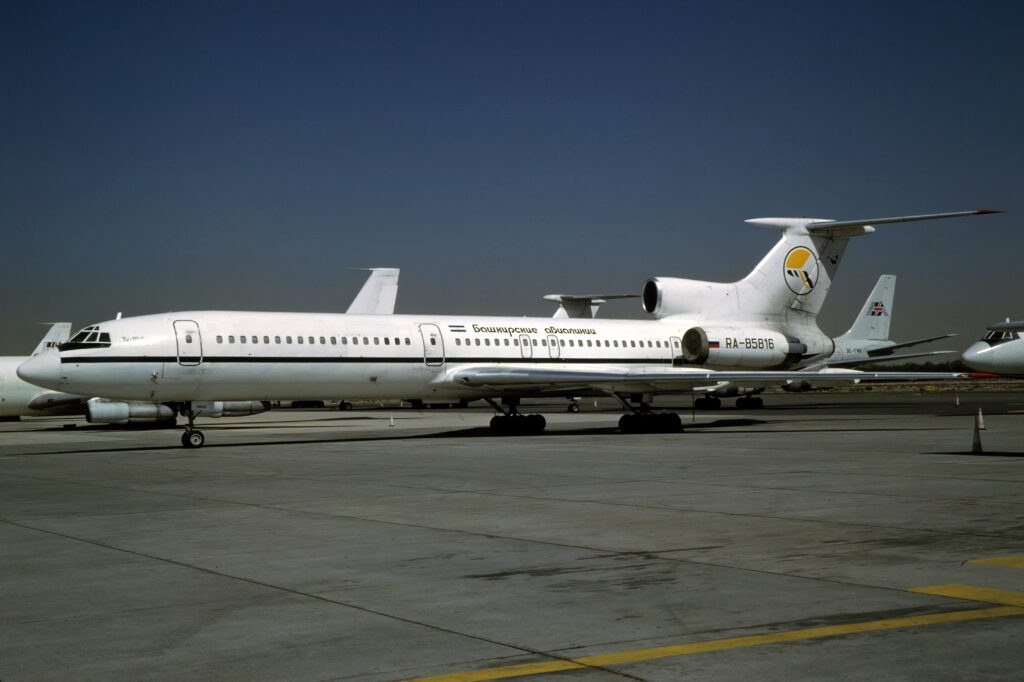
The Bashkir Airlines TU-154M plane took off at 22:48 Moscow time and headed towards Barcelona. More than two hours later, he flew into airspace controlled by the Swiss company Skyguide.
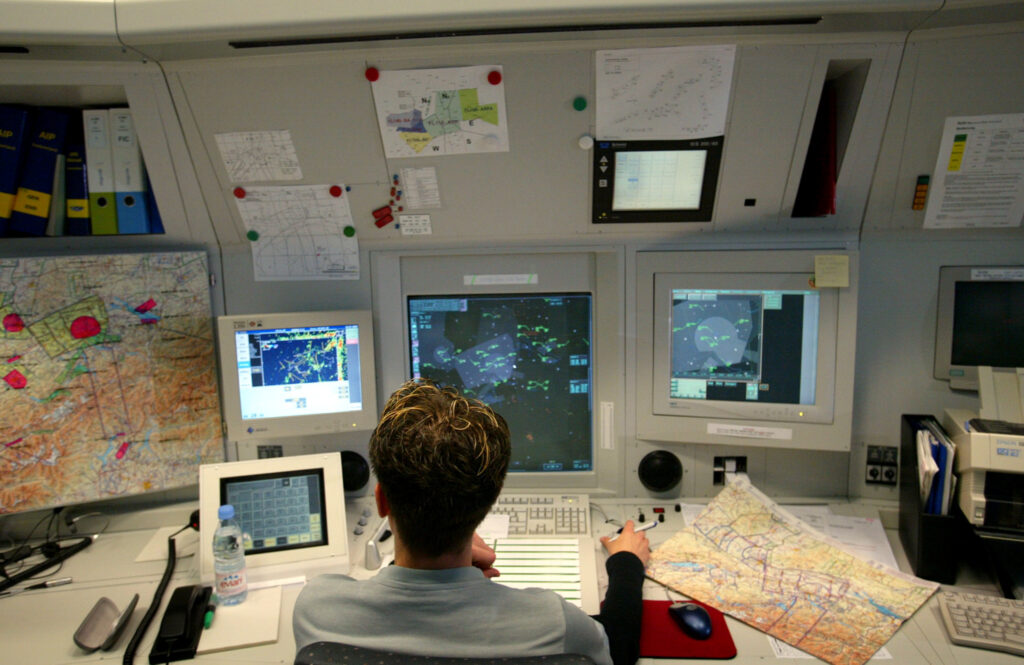
Air traffic controller Peter Nielsen was on duty at the Skyguide office in Zurich that night. He had to control the movement of the planes: make sure that their flight paths did not intersect, give the pilots, if necessary, instructions to descend or gain altitude. He was alone at the controls: his partner had gone to the break room for a break.
Around the same time, a Boeing B757-200 freighter flew into the space operated by Skyguide. It belonged to the transport company DHL and was heading from Bergamo, Italy to Brussels.
Peter Nielsen did not immediately notice that the planes were getting closer . The fact is that that night he had another work task - a higher priority according to internal instructions. He was unable to complete it quickly - a faulty telephone connection was in the way. In addition, when the planes got close, the automatic system that warned about this did not work.
At this time, both on the Russian passenger board and on the postal Boeing, the TCAS system (Traffic Collision Avoidance System, a system for preventing aircraft collisions in the air) was activated . This equipment monitors the area around the aircraft and detects other ships that are also equipped with TCAS sensors. The system instructs pilots on how to change altitude to avoid a collision.
The automation noticed that the planes were flying into each other and began to “separate” them. TCAS instructed the Russian board to urgently gain altitude. She ordered the DHL mail plane to descend quickly.
But air traffic controller Peter Nielsen did not know what instructions the TCAS system gave the pilots. And he made his own decision. The controller decided that the DHL plane should maintain altitude, and the Russian TU-154M should descend.
While the automatic voice of the TCAS system in the cockpit of the Ufa pilots repeated : “Climb! Climb! (“Climbing! Gaining altitude!”)”, Peter Nielsen’s voice gave instructions to descend. The commander of the Bashkir Airlines plane, Alexander Gross, obeyed instructions from the ground and began to lose altitude. The Boeing pilot obeyed the automation instructions and also began to descend.
For the next few seconds, the pilots of the Ufa plane tried to understand whether they had done the right thing by descending. As it later became clear from the transcripts of the black boxes, the co-pilot, Murat Itkulov, noticed that TCAS was giving other instructions: “Climb, says!” But the inspection squadron commander, Oleg Grigoriev, who was in the cockpit on this flight, replied: “Get down, whore!”
Peter Nielsen repeated from the ground: “Accelerate the descent.” The TCAS system insisted: “Increase climb, increase climb!” (“Intensify climb!”).”
“Climb, he speaks!” - the co-pilot insisted. “Fuck, where is he?” — the aircraft commander was perplexed, referring to the plane going in their direction.
After about 30 seconds, the commander saw a Boeing in the sky. He jerked the wheel. It was late. The Boeing crashed into the TU-154M almost at a right angle. The passenger plane broke into four parts in the air. Both ships fell to the ground in southern Germany, near Lake Constance, among forests and fields.
I'll still find this dispatcher
Kaloev was one of the first to arrive at the scene of the disaster. He took a plane to Zurich, and from there he traveled a hundred kilometers by taxi. There was almost no one around, only the police were starting to set up a cordon.
The bodies of children were scattered on the field, on the road, at crossroads - for about ten kilometers around.
“When I saw it, I completely froze,” Kaloev recalled. “I don’t know how much time passed, I couldn’t even move.” They showed him the bodies of Diana and Konstantin, and he identified them. “I yelled, screamed, cried,” Kaloev recalled. “The highway passed nearby, and my screams stopped the cars. People couldn’t understand what happened, that the man was screaming like a wounded animal.” The bodies of his children were washed and dressed. They were left lying in a ritual hall located near the crash site. Kaloev said that for a whole week he came to this hall every evening and sat next to the bodies of his son and daughter.
Kaloev was shown the places where his son and daughter fell. He took a handful of earth from the place where his son died. “Where the girl fell, there was also a sign, I went up and put my hands on that place, I felt some bumps under my fingers. I started to feel it, I thought, what is this? - he said. “The grass was tall, so I pulled it apart and took out the bead.” Then the second, then the third. These were my daughter’s beads... That’s how she fell, they tore at her neck and scattered there. There's still hair on the tree."
The remains of Kaloev’s wife Sveta were found later. He recalled that there was almost nothing left of her.
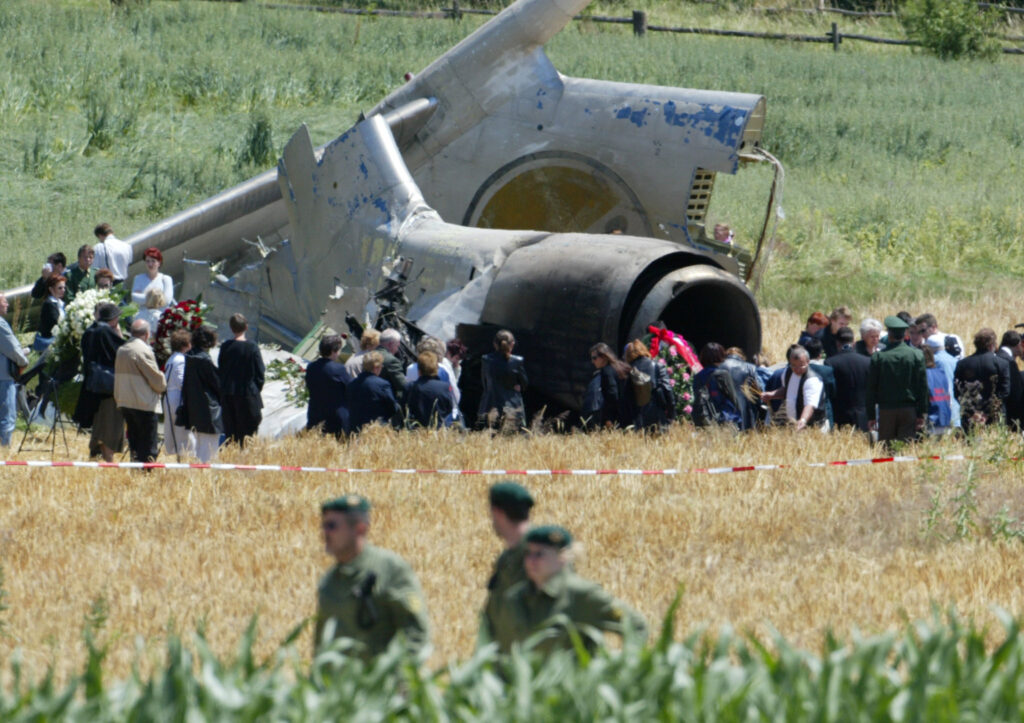
Two days after Kaloev arrived at the crash site, 139 relatives of the deceased passengers flew to Germany from Ufa. They brought with them combs, toothbrushes, underwear, toys and clothes of their children: these things were needed to collect genetic material and identify the bodies using DNA. They also took flowers and mourning wreaths on board.
In Germany, relatives dressed in black were taken to a castle near the crash site. “They were all very quiet, in a mournful mood,” recalled a local airport employee. At the castle, the Ufa residents were met by German ministers, a Russian deputy minister and Russian-speaking psychologists.
A mourning ceremony was held for the relatives of the victims: they scattered the Bashkir soil that they had brought with them near the plane crash site. The bodies were not shown to the visitors: as the German authorities explained, this decision was made in order to “save the parents from the ordeal of identification.” The remains of some passengers had to be removed from the plane: they remained fastened to their seats.
Soon the bodies were transported to Russia. The schoolchildren and the adults accompanying them were buried in Ufa on July 15. Svetlana, Konstantin and Diana Kaloev were buried in Vladikavkaz.
“When I returned to my house after the funeral, it felt like I had come to an empty house. Although it was full of people, for me it became empty. Life has lost its meaning,” Kaloev said later. “They didn’t leave me alone for a minute.” Neighbors, brothers, sisters, and relatives were always nearby. Distracted. I went to the cemetery every day.” His relative recalled that Kaloev did not even want to leave the grave at night: “His nephews came for him and took him home, completely exhausted.”
He quit working and spent all the money to erect a monument on the grave of his wife and children. After installation, the tombstone cracked. “Vitaly immediately asked to remove everything and do it again. “He wanted everything to be perfect,” his relative recalled . “[He] did not shave his beard even after forty days: he said that he would mourn until his death.” On Svetlana’s birthday, December 21, he made his late wife’s dream come true: he opened a store in Vladikavkaz and named it after her.
Kaloyev's relatives said that after the death of his children and wife, he changed a lot. They tried not to leave him alone.
“There is no happiness left for him. No joy,” his brother said. “He remained a kind person, but he began to avoid society.”
So a year passed. In the summer of 2003, relatives of the victims flew to Germany again: on the occasion of the anniversary of the tragedy, a memorial was held there. Kaloev, as the father of one of the dead schoolgirls later recalled , was silent and withdrawn, but not aggressive - at least, no more aggressive than others. The next day, as Izvestia wrote , citing its own sources, Kaloev came to the Skyguide office. There he tried to find out whether the company believed that the culprit of the tragedy was the dispatcher, and asked to meet with him.
Kommersant, with reference to an anonymous Bashkir journalist, wrote : after a while in a narrow circle, Kaloev said that “he will still find this air traffic controller.” Nobody took this threat seriously back then.
"I may have killed him"
The day after the murder of Peter Nielsen, flights were delayed at Zurich airport. His fellow air traffic controllers were so shocked that they did not come to work, and there was no one to control the movement of the planes.
“We are all in shock. Never before have any of our employees been attacked,” the Skyguide press service said.
Just two days later, police announced that they had arrested a murder suspect. Vitaly Kaloev did not admit his guilt - but all the evidence pointed to him. For example, he was identified by a neighbor of the murdered man: Kaloev met her while he was looking for the right house, showed her some piece of paper with the name of Peter Nielsen, and she showed the stranger where the air traffic controller lived.
Kaloev’s relatives were aware that he had gone to Switzerland, but they assured that he had no plans to commit lynching. “He was looking for justice,” said Kaloev’s brother Yuri. “Since the investigation was not progressing, he decided to go to Zurich and deal with the matter locally. I flew there, called me - everything is fine, don’t worry. And what happened next, no one knows anything.”
Kaloev, his brother said, was not even able to slaughter a chicken: “I can buy a ram, slaughter it, butcher it. My father taught me <...> But Vitaly never knew how to do this, the most he can do is hold the legs of a lamb while it is being slaughtered,” assured Yuri Kaloev.
The whole country was watching Kaloev’s fate, including the Russian authorities. The Chairman of the Parliament of North Ossetia, Taimuraz Mamsurov, asked the Russian Embassy in Switzerland to find “the best Swiss lawyers under any conditions” for their compatriot. Several Ufa residents - relatives of those killed in the plane crash - went to the Swiss embassy in Moscow with a picket
Kaloev denied that he planned the murder in advance. He said that he went to Peter Nielsen's house to show him photographs of his dead wife and children and their graves - and expected the air traffic controller to ask him for forgiveness. But he, according to Kaloev, did not listen to him and tried to push him away. The photographs fell out of his hands and scattered on the ground. After this, as Kaloev claimed , his vision “instantly went dark”: “It seemed to me that my children were turned over in coffins, thrown out of them.” What he did after that, Kaloev, according to him, did not remember. But in the end he said : “Perhaps I killed him.”
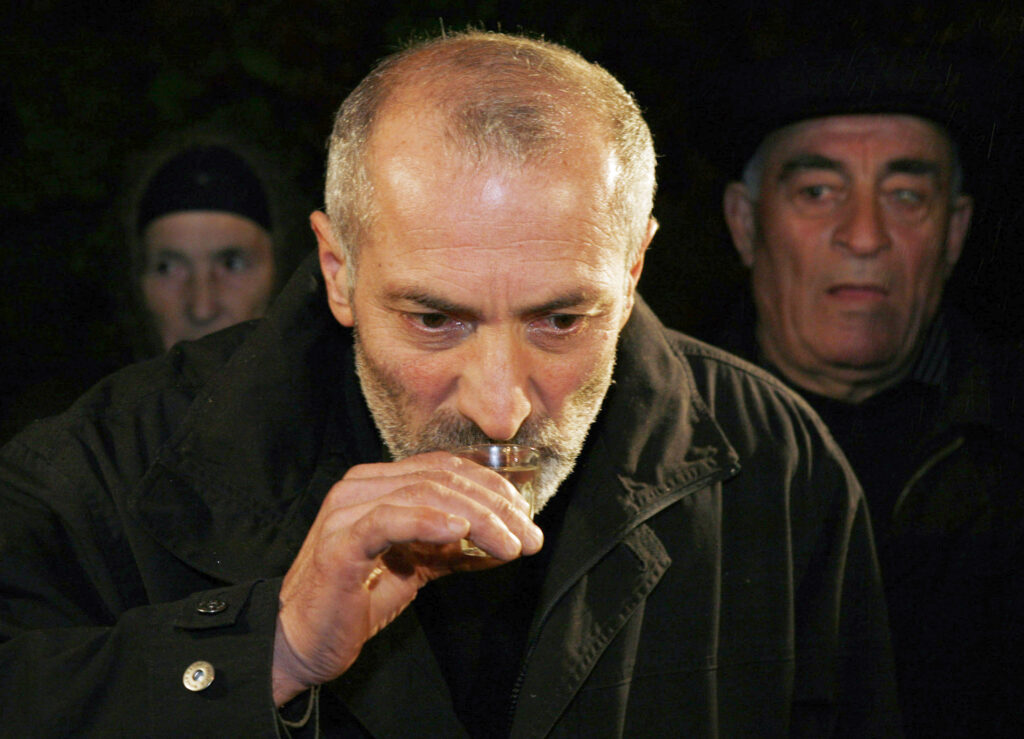
During the investigation, Vitaly Kaloev spent a long time in the clinic: he was diagnosed with a personality disorder and they feared that he would commit suicide. But in general, experts recognized him as sane.
The trial finally began in October 2004. A Swiss priest, who visited the accused in prison before the start of the trial, said that Vitaly Kaloev “is calm and glad that he can openly talk about the fact that he is not only a criminal, but also a victim.”
On the eve of the trial, details of the murder became known. According to the investigation , Vitaly Kaloev stabbed Peter Nielsen in the chest, tearing an artery and vein - and this wound was already fatal. But Kaloev didn’t stop there: he pierced the air traffic controller’s liver and heart, cut his chest, arms and face and knocked out two teeth.
After that, as stated in the indictment, Vitaly Kaloev collected the photographs scattered on the ground. He threw the knife into a nearby area, and when he returned to the hotel, he took off his clothes and threw them into the bushes.
Even at the trial, it became clear how exactly Vitaly Kaloev found Peter Nielsen. It turned out that he specifically contacted a detective agency in Moscow to find out the name of the dispatcher whom he blamed for the tragedy.
“Shame on the court!”
The main thing that the prosecution and defense discussed in court was whether the murder of Peter Nielsen was premeditated or not. Vitaly Kaloev insisted that he had no intention to kill. “I didn’t come to Switzerland to kill someone,” he said . “If I had intentions to take someone’s life, I would not have waited one and a half to two years.”
The prosecutor insisted otherwise. He did not deny that Vitaly Kaloyev had a “long-term personality disorder after extreme overload.” But he paid attention: the defendant stabbed the knife into Peter Nielsen’s body with such enormous force that the 10 cm long blade left wounds 16 cm deep. “Common mind does not allow any doubt that the decision to kill was made at least in Moscow or upon arrival in Zurich,” said the prosecutor.
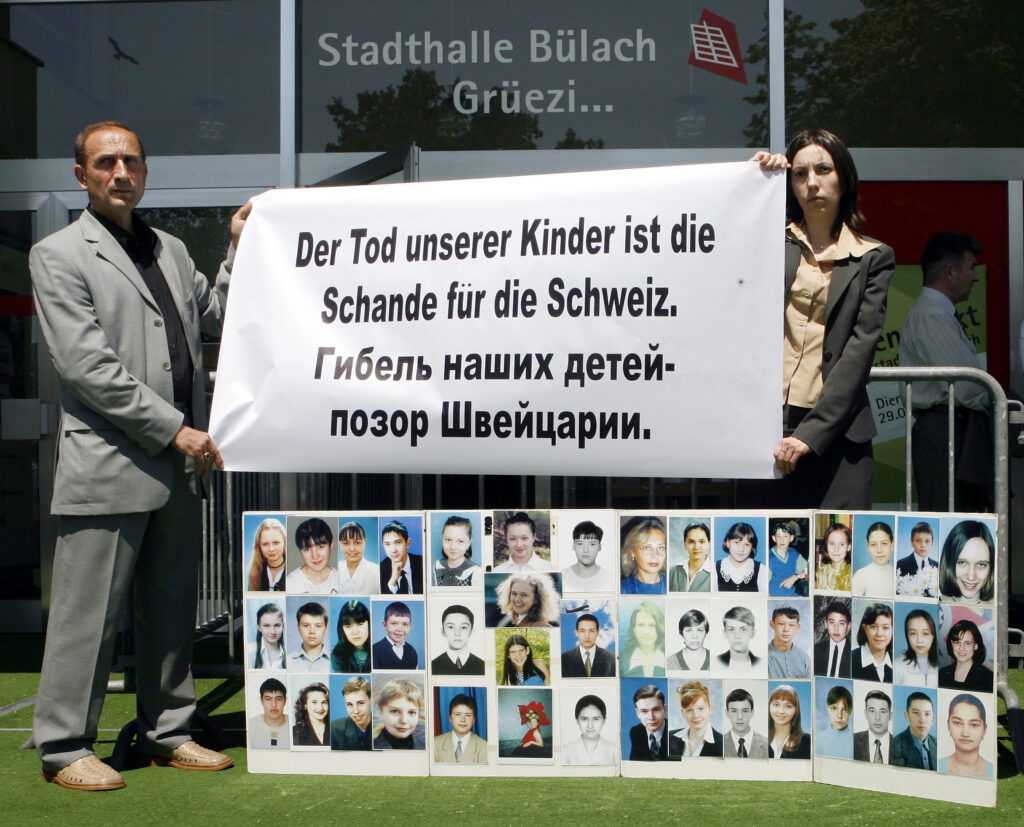
On the day when Vitaly Kaloyev was to be sentenced, his relatives from North Ossetia came to the Zurich court to support him. The brother of the accused, Yuri Kaloev, showed journalists photographs of the crash site in order to convey to the public what exactly Vitaly saw when he arrived at the crashed plane. The photographs showed the bodies of crashed children. “Show it,” Yuri Kaloev told reporters. “And this trial is nothing more than a farce.”
The panel of judges discussed the verdict for three hours. According to Swiss law, they did this publicly . The entire time the verdict was being discussed, Vitaly Kaloev sat almost motionless, looking at the judges. When the time came to read out the verdict and the chairman of the court asked the defendant to stand up, he remained seated without moving. “Why on earth would I get up if I’m even accused of burying my children?” - he said.
The court found Vitaly Kaloyev guilty of premeditated murder. He was sentenced to eight years in a maximum security prison. He had to serve his sentence in Switzerland. After the judge read out the verdict, compatriots who came to support Kaloev shouted: “Freedom for Vitaly! Shame on the court!
An unfathomable tragedy
Even before the murder, Vitaly Kaloev and other relatives of the dead passengers were angry at how long it took German authorities to investigate the cause of the plane crash. The victims felt that the process was being deliberately delayed.
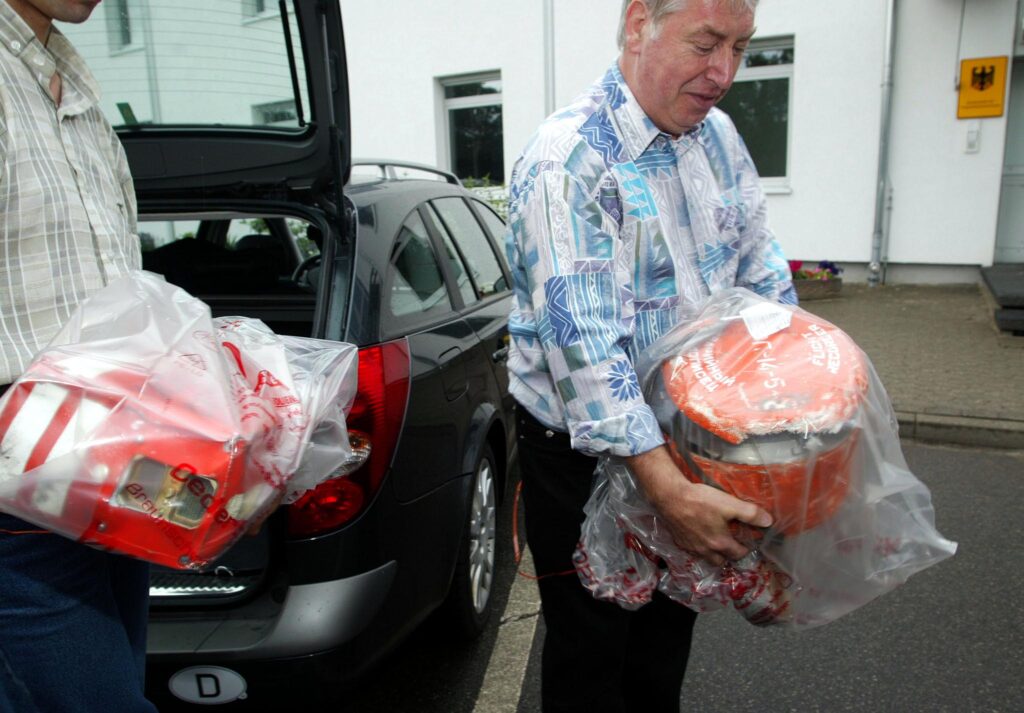
Immediately after the plane crash, German authorities said that the investigation would take “at least a month.” Just five days after the tragedy, the black boxes from both planes were deciphered . But the final results were published only almost two years later, in May 2004, after the death of Peter Nielsen.
German authorities established that a chain of circumstances and miscalculations led to the disaster. Some of them were due to the fact that Skyguide's systems did not work correctly and did not notice the danger in time.
Therefore, Peter Nielsen reacted too late: he gave the command to the TU-154M crew just 43 seconds before the disaster. All this happened due to the fact that the automation in the Skyguide office that night worked in a limited mode. Due to maintenance, the radar was in standby mode and optical collision avoidance was unavailable.
Skyguide also had problems with telephone communications. Peter Nielsen's colleague, an air traffic controller on duty that night in the German city of Karlsruhe, noticed the threat of a plane collision much earlier - but could not get through to Skyguide.
A situation where only one air traffic controller is on duty at night should also not have arisen: this is contrary to the principles of air traffic safety. But Skyguide, as it turned out, had been violating these requirements for years.
The investigation also revealed a systemic problem . Crews from different countries had different attitudes to automation instructions. ICAO, the International Civil Aviation Organization, regulations required pilots to strictly follow TCAS commands. But the instructions given to pilots by the authorities of different states and even by the heads of different airlines often contradicted each other and international standards. If the commander of the Russian airliner had given priority to the TCAS command rather than to the dispatcher's instructions, the planes would not have collided.
This investigation determined the causes of the accident. But the culprits had yet to be determined. It took another three years. It was only in September 2007 that a court in Switzerland sentenced Skyguide employees.
Eight employees of the control center were in the dock: middle managers , an air traffic controller and four technical specialists. They were accused of contributing to the circumstances that led to the tragedy. None of them admitted their guilt. Some placed the blame on the deceased Peter Nielsen, accusing him of not following instructions.
The court found four Skyguide employees guilty of criminal negligence leading to mass murder. Three were sentenced to a year of suspended imprisonment. Another employee was ordered by the court to pay a fine of 13.5 thousand Swiss francs. The remaining four were acquitted.
Before reading the verdict, the judge said: if two air traffic controllers had been on duty that night, rather than one, the tragedy could have been avoided .
After the verdict, Skyguidestated that they had already taken all measures to avoid a repetition of the tragedy in the future, and were not going to fire convicted employees: “In Switzerland, it is not customary to simply fire your employees on the basis of a court verdict. Perhaps there are different orders in Russia, and we, of course, respect them, but in Switzerland it happens differently.”
"He's nothing to me"
In July 2007, even before the court sentenced the dispatch center employees, the High Court of Zurich commuted Kaloyev's sentence due to limited sanity. And a few months later he was released . In November 2007, he left prison and boarded a plane to Moscow.
In total, Kaloev spent three years and eight months in prison. During this time, in his native North Ossetia, his story turned into an epic. They retold it to each other, adding more and more heroic features to the image of the businessman who avenged his wife and children.
It is not surprising that at Domodedovo airport, where Kaloev flew from Switzerland, he was greeted as a hero. He was immediately surrounded by a crowd of journalists with cameras. About a hundred activists of the youth movement “Nashi”, created on the initiative of the Kremlin, lined up near Domodedovo with posters “You are a real person!”
The next day he had a flight from Moscow to Vladikavkaz, for which he was late . The plane was delayed for Kaloyev's sake. At the airport of his hometown, he was also greeted with an ovation and flowers. At home, 150 relatives and neighbors were waiting for him: they gathered around a laid festive table with Ossetian pies and a slaughtered sacrificial ram.
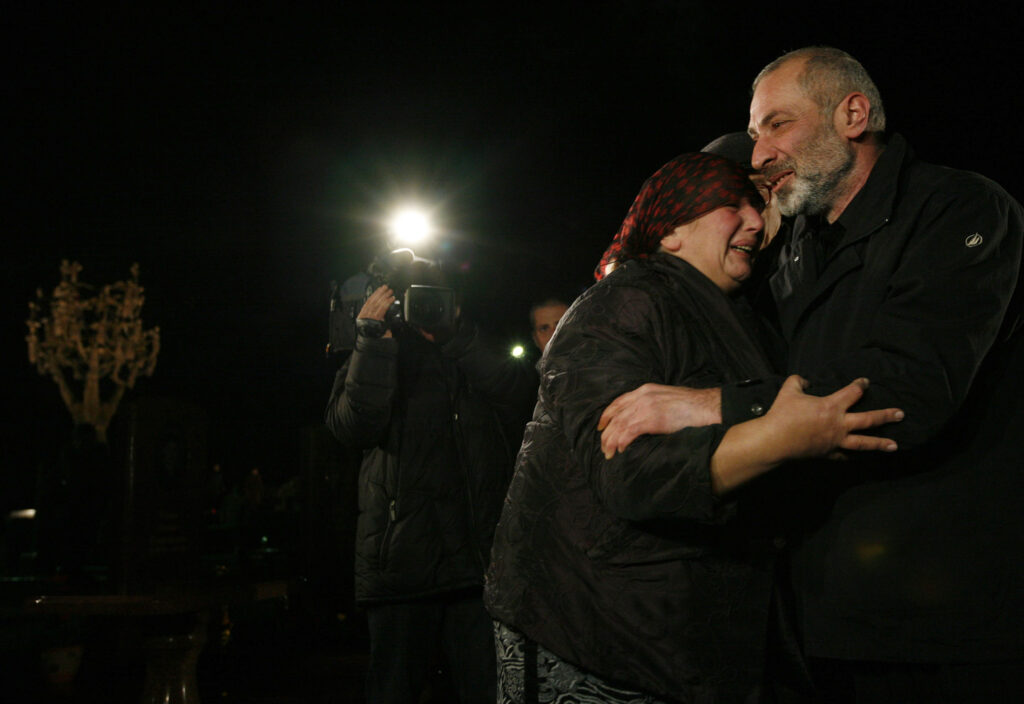
After getting off the ramp, Kaloev first went to the Beslan cemetery, where the victims of the September 1 terrorist attack were buried. There he knelt down and sobbed. At the cemetery, several women approached him - mothers of children killed during the hostage-taking. “Vitalik,” said one of them. “I’ve been telling my daughter all this time that you will definitely come back and do what you did to the killer of your family and the killers of our children.”
Kaloev himself said that after his release he “didn’t feel anything.” He did not agree with the idea that in Russia he was greeted as a hero: “I was greeted as a very ordinary person. As a person who defended the honor of his children, his family, and that’s it.”
The facts suggested the opposite: already in 2008, Kaloyev was appointed to the post of Deputy Minister of Construction of North Ossetia. And in 2019, he ran for election to the Vladikavkaz city assembly from United Russia and received a mandate (however, already in 2020 he renounced his parliamentary powers). In recent years, he has lived privately and does not communicate with the press.
A year before the elections, Kaloev married for the second time and became the father of twins. He said that the children “revived his home and soul”: “If I could spank their older brother and sister on the ass, now that’s no longer the case.”
In an interview, Kaloev admitted that he was annoyed when the press called him a “murderer”: “Who then is Peter Nielsen? Not a murderer? When asked whether, after years, he considers the air traffic controller to be the culprit of the tragedy or the victim, he answered: “He is nothing to me.”
Author: Masha Morozova
Photo: Eduard Korniyenko/Reuters