
Translated material
Why did “Fjord,” which defends conservative traditions, turn out stronger than Zvyagintsev’s anti-war “Minotaur” at Cannes? And what other films won prizes?
Anton Dolin evaluates the results of the 79th Cannes Film Festival
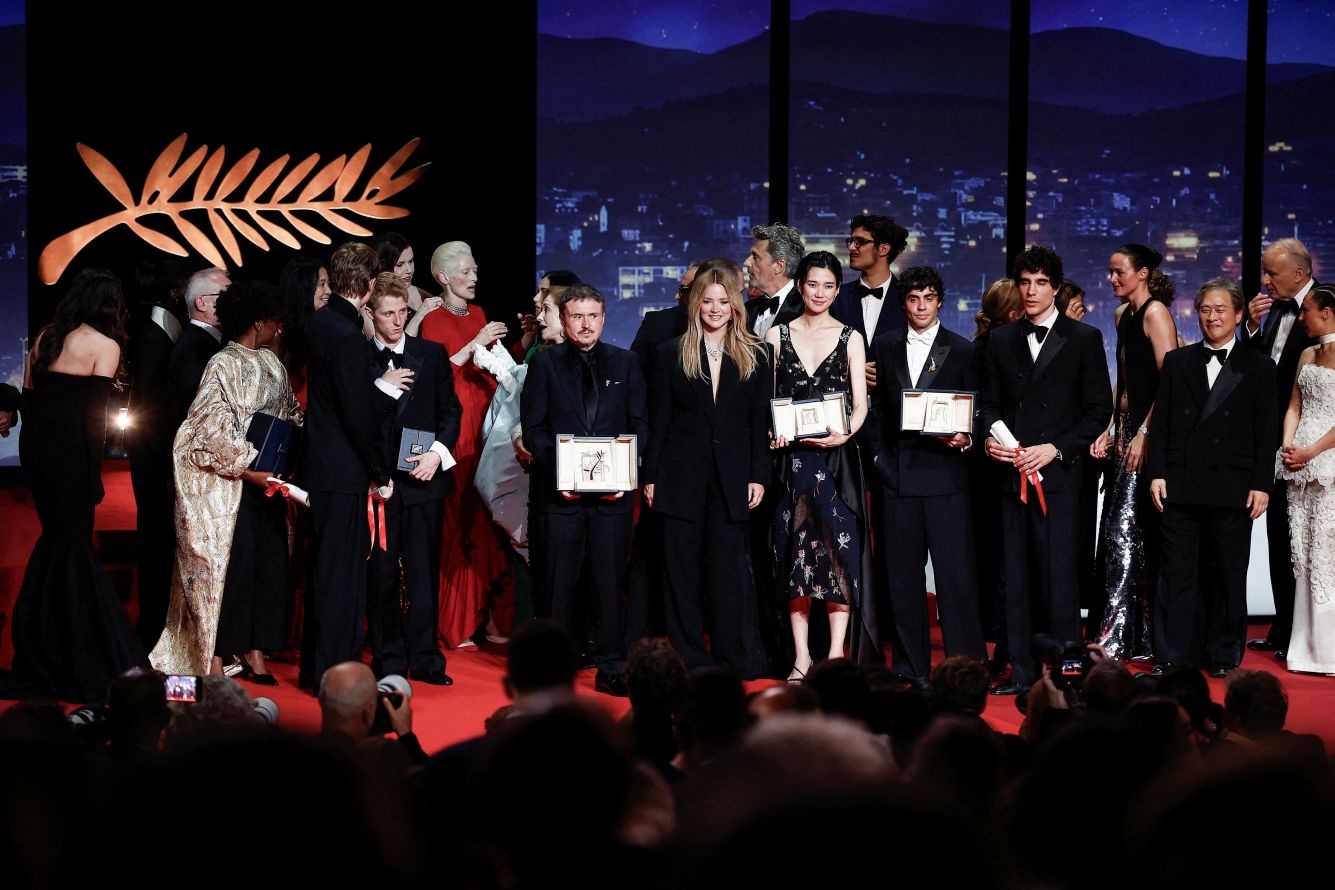
The 79th film festival ended in Cannes, the triumph of which was the Romanian drama “Fjord” about a religious family from Romania that moved to Norway and is not ready to adapt to liberal Northern European rules. Andrei Zvyagintsev received “Silver” for his “Minotaur” - the first feature film that seriously and uncompromisingly comprehends the “era of the Northern Military District.” Meduza film critic Anton Dolin explains why the jury distributed the prizes the way they did, and talks about other films that impressed the judges and received coveted awards.
The Grand Prix (that is, Cannes “silver”) for Andrei Zvyagintsev’s “Minotaur” is indescribably cool. Not a single Russian-speaking director has received such large-scale awards at the Cannes Film Festival in the 21st century. The penultimate Grand Prix winner from Russia was Nikita Mikhalkov. This happened back in 1994, when Burnt by the Sun lost to Quentin Tarantino’s Pulp Fiction. In Soviet times, Andrei Tarkovsky with “Sacrifice” and Tengiz Abuladze with “Repentance” became laureates of the same prize.
There were, however, in recent years the Grand Prix "Coupe No. 6" by Juho Kuosmanen and the "Palme d'Or" "Anore" by Sean Baker, both filmed partly in Russian and with Yura Borisov. However, Cannes is a festival of directors. Where and no matter what they were filmed about, the nationality of the films is determined by the name and biography of the author. The Finns quite naturally rejoiced at the triumph of Coupe No. 6, and the Americans rejoiced at the Anors. Will the Russians be happy with Zvyagintsev's victory? This is a question without an answer yet.
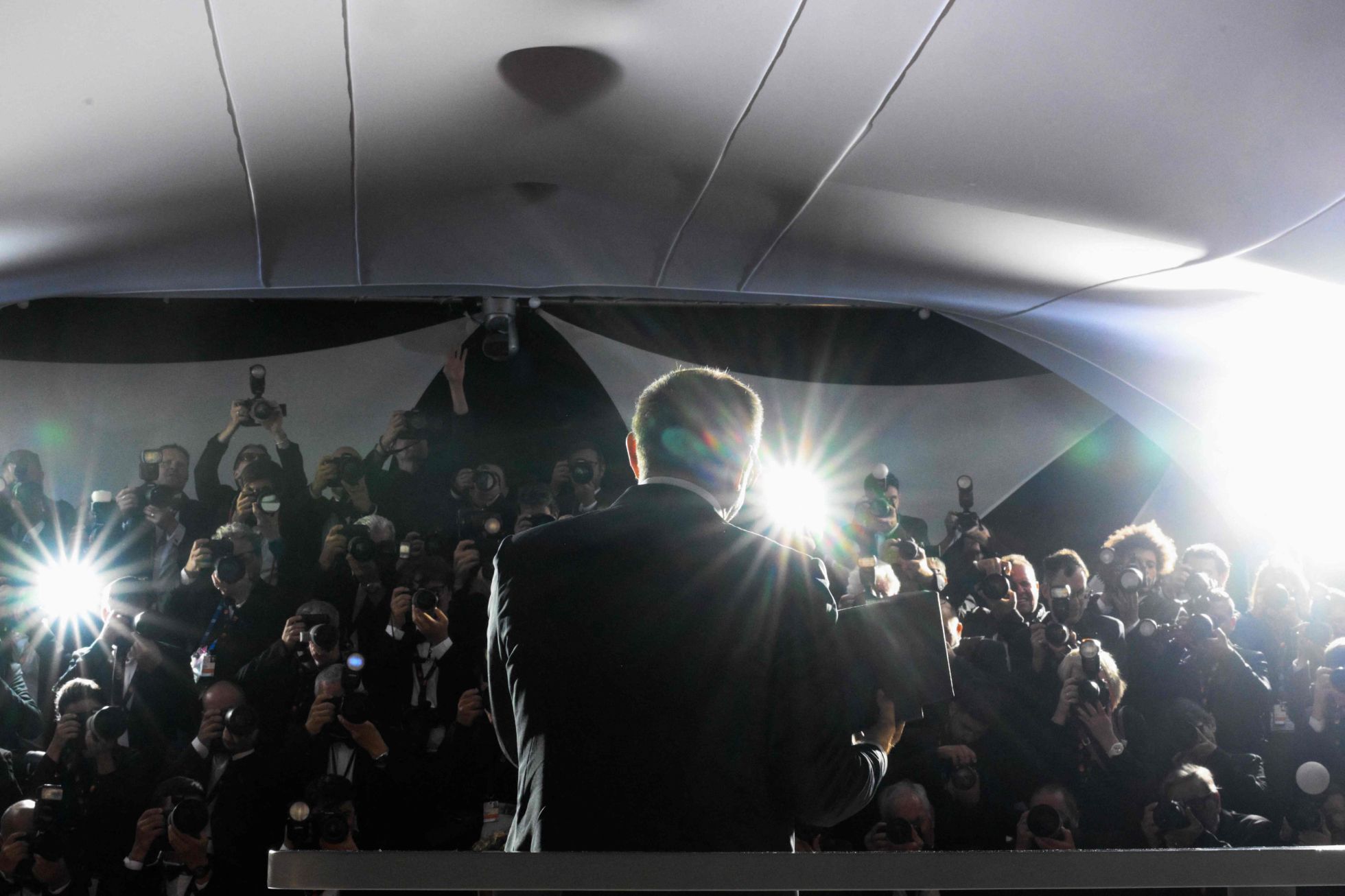
The awarding of the Minotaur took place in extraordinary, extreme circumstances. The war has been going on for five years, completely changing the existence and structure of Russian culture. Many talented artists found themselves in forced emigration for political reasons, Zvyagintsev among them.
Under these conditions, and even after nine years of silence, making an anti-war film with European producers in Russian and about Russia, directly challenging the current censorship of the Russian Federation, is a heroic task that seemed impossible. And to do this in such a way that the film turns out to be outstanding and touches even those who are completely excluded from the political context...
Zvyagintsev succeeded. For him, among other things, this extraordinary success will definitely become a springboard that will allow him to carry out further projects. But Minotaur could open the door of opportunity for other Russians in exile, proving to potential Western producers the creative potential of similar projects.
I don’t want to fall into the common sin among Russian filmmakers, feeling the victory of “Minotaur” as a defeat - after all, the film did not take the main award, the Palme d’Or. It went to the talented Romanian Cristian Mungiu for the second time for his drama Fjord . The film was also awarded by two independent juries - FIPRESCI (that is, the press) and Ecumenical.
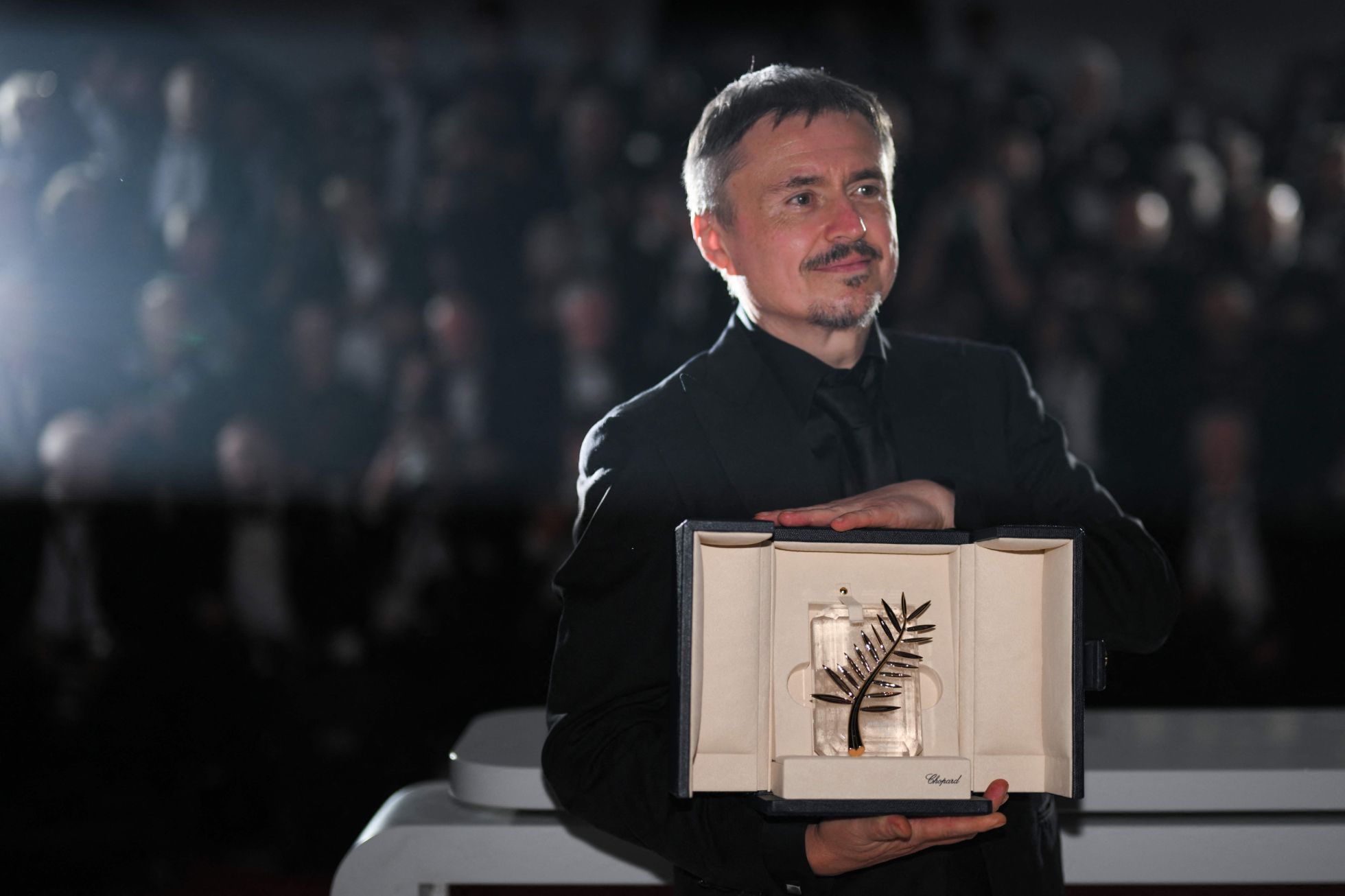
The reasons are quite clear. “Fjord” talks about intra-European problems and conflicts; its author takes a conservative position that is unpopular in liberal film circles - and this admires many. Mungiu throws down the gauntlet to the Scandinavian system for protecting children's rights (and does it with money from Scandinavian film funds) and defends the right of religious conservatives to preserve traditions. Including the tradition of corporal punishment for children.
Maybe not everyone in Cannes agrees with these theses themselves, but they intuitively sense their subversive power. The pathos of Zvyagintsev’s much more complex and innovative picture concerns those political and social areas that the world still knows about from hearsay, without really delving into the distant and obscure material: some kind of partial mobilization, some conscripts, some kind of “SVO”. In addition, the geopolitical situation is changing too quickly, and the anti-war fervor of many in Europe has faded: not everyone has fully understood how to approach the destructive war in Ukraine in 2026. Whether it’s the case of “liberal fascists” from Norway, whose fabulous lawlessness is easy, pleasant and safe to expose, the jury decided.
One must think that the last thing Park Chan-wook's jury members wanted was to shock or provoke anyone. On the contrary, they tried to balance everything - so much so that in addition to the “traditional values” in Mungiu’s film, they also supported LGBTQ freedoms in the costume dramas “Coward” and “Black Ball”. And in order to offend the least number of people, they gave out two prizes in three categories, director's and two acting.
We've published separate articles on many of the winning films - not only Fjord and Minotaur, but also Ryusuke Hamaguchi's Suddenly (Virginie Efira and Tao Okamoto Best Actress Award) and Pawel Pawlikowski's Vaterland (Director Award). It remains to talk about four more awarded films.
“Black Ball” by Javier Calvo and Javier Ambrossi (Spain)
Directing Prize, shared with Pawel Pawlikowski
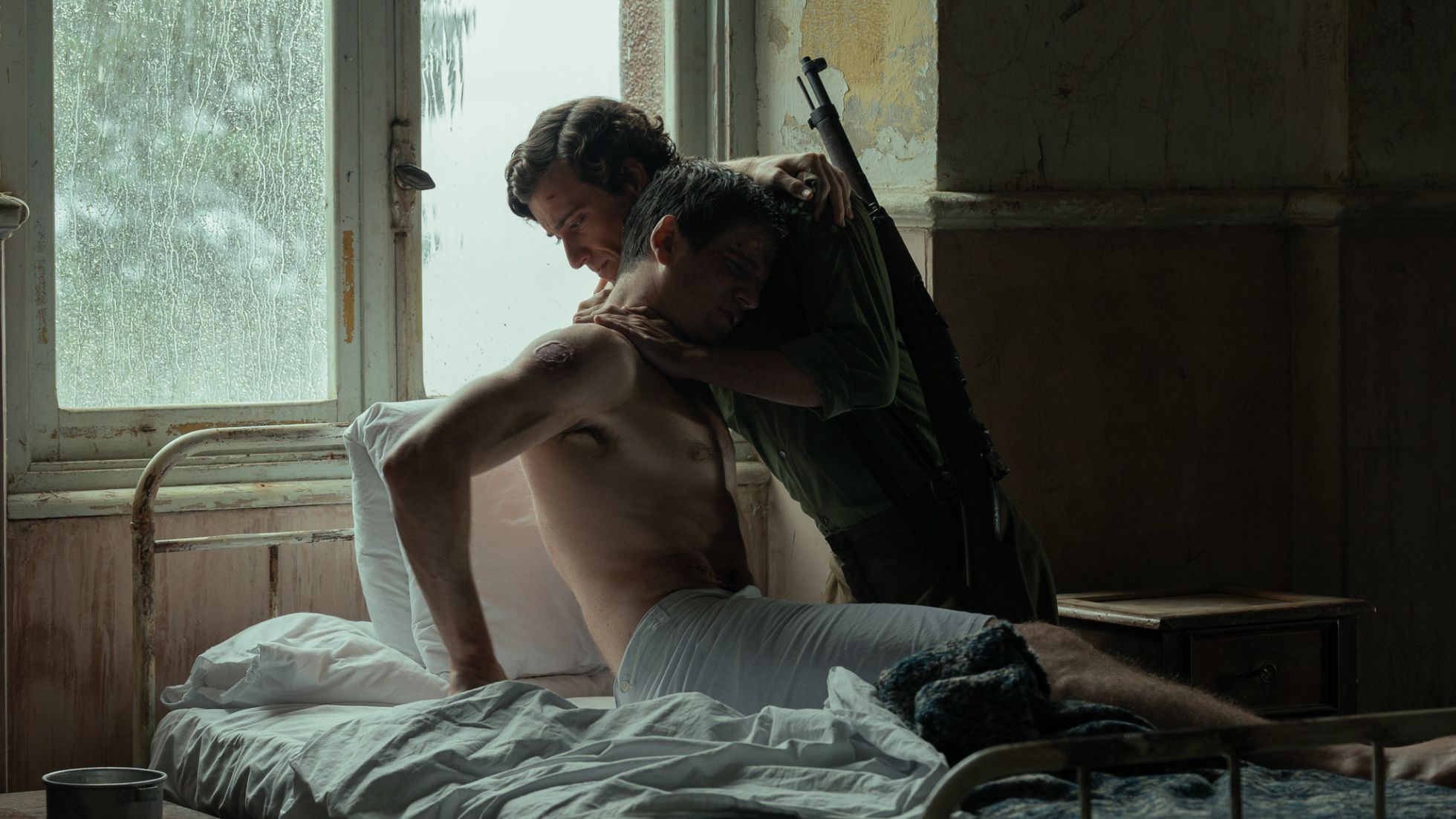
The duet "Javi" - as the director's tandem is lovingly called in Spain - is participating in the Cannes competition for the first time. “Black Ball” is a full-length film, filmed after many years of work by the two Javiers on television. In the monumental and whimsically arranged picture, one can immediately feel the training of experienced serial makers.
The action of the rich stage drama unfolds in three space-time layers. The first, abstract, shows a young man rejected from an elite club on suspicion of homosexuality: it is a variation on the theme of Federico García Lorca’s last unfinished text, which was called “The Black Ball”.
The second, historical, is a dramatic story of two young men: Lorca’s lover, who was shot shortly after the death of the poet, a Republican officer, and his guard, who fell in love with the handsome prisoner.
The third, modern, line tells about the grandson of that same guard: as an inheritance from his grandfather, he receives a treasure - the completion of Lorca's dying manuscript, which was considered lost.
Melodramatic, lush, visually close to kitsch, the picture by Calvo and Ambrossi impressed the Cannes audience and the jury with the complexity of the composition and the ambitiousness of the concept, which is based on the collision of several repressive systems with the idea of absolute sexual freedom. In addition to Spanish artists known only in their homeland, Penelope Cruz and Glenn Close played in “The Black Ball”.
“Our Salvation” by Emmanuel Marr (France)
Screenplay Award
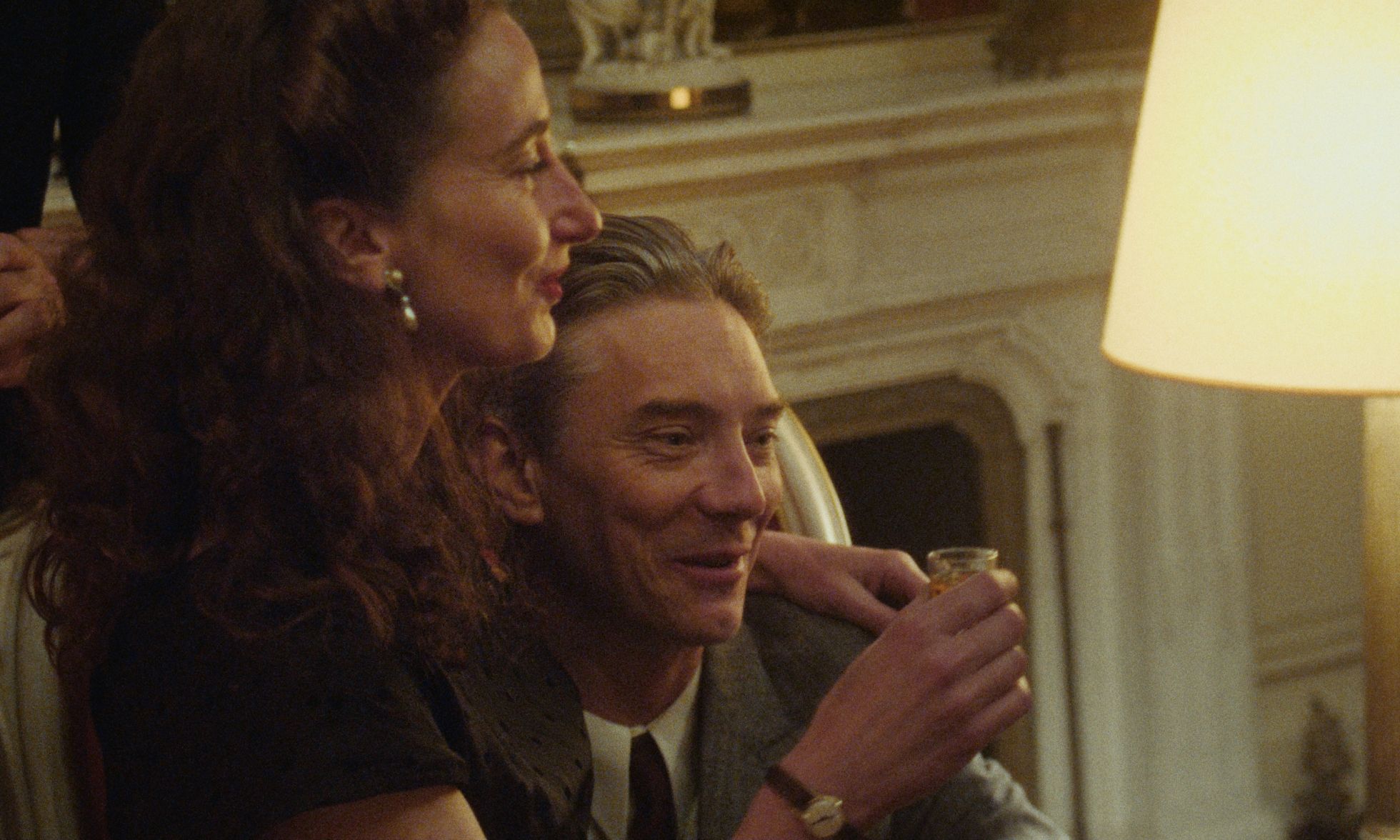
Perhaps the most experimental and unusual film in the competition. Alas, it cannot be said that the author (this is his first independent full-length film after his debut, filmed in collaboration) completely succeeded in all the tasks set.
It's the beginning of World War II. Brilliantly played by Swann Arlo (the lawyer from Anatomy of a Fall ), the self-taught social philosopher arrives in Vichy to offer his services to the local government. He is not a cynic or a careerist; on the contrary, he dreams of benefiting France, in whose name he is ready to do anything.
Gradually moving up the career line, this idealist moves with his family into an apartment that previously belonged to a wealthy Jewish family. Day after day he burns at work, enthusiastically discussing with fellow officials the issue of fuel supplies and logistics for more efficient delivery of trains to concentration camps...
The appeal of cinema to the themes of Nazi occupation and collaboration, especially in recent years, is not surprising. The Cannes main program alone included several other films about the same historical period. In “Our Salvation” the author’s original approach is interesting. Marr, in the spirit of Ilya Khrzhanovsky’s “Dau,” films Vichy France as if from a documentary, caring not about fascination for the modern viewer, but about the effect of extreme authenticity, virtually presence.
The spectacle is monotonous, although at times addictive. Sometimes the director, in Brechtian style, breaks the illusion, and his characters in 1940s costumes begin to dance to disco and 1980s pop music. After all, the situation shown in the film is timeless.
The name of the (anti) hero of the film is Henri Marr, this is the great-grandfather of Emmanuel Marr. He wrote the script, inspired by the surviving correspondence between Henri and his wife: this poignant epistolary novel is heard behind the scenes.
“Dream Adventure” by Valeska Grisebach (Germany - Bulgaria)
Jury Prize
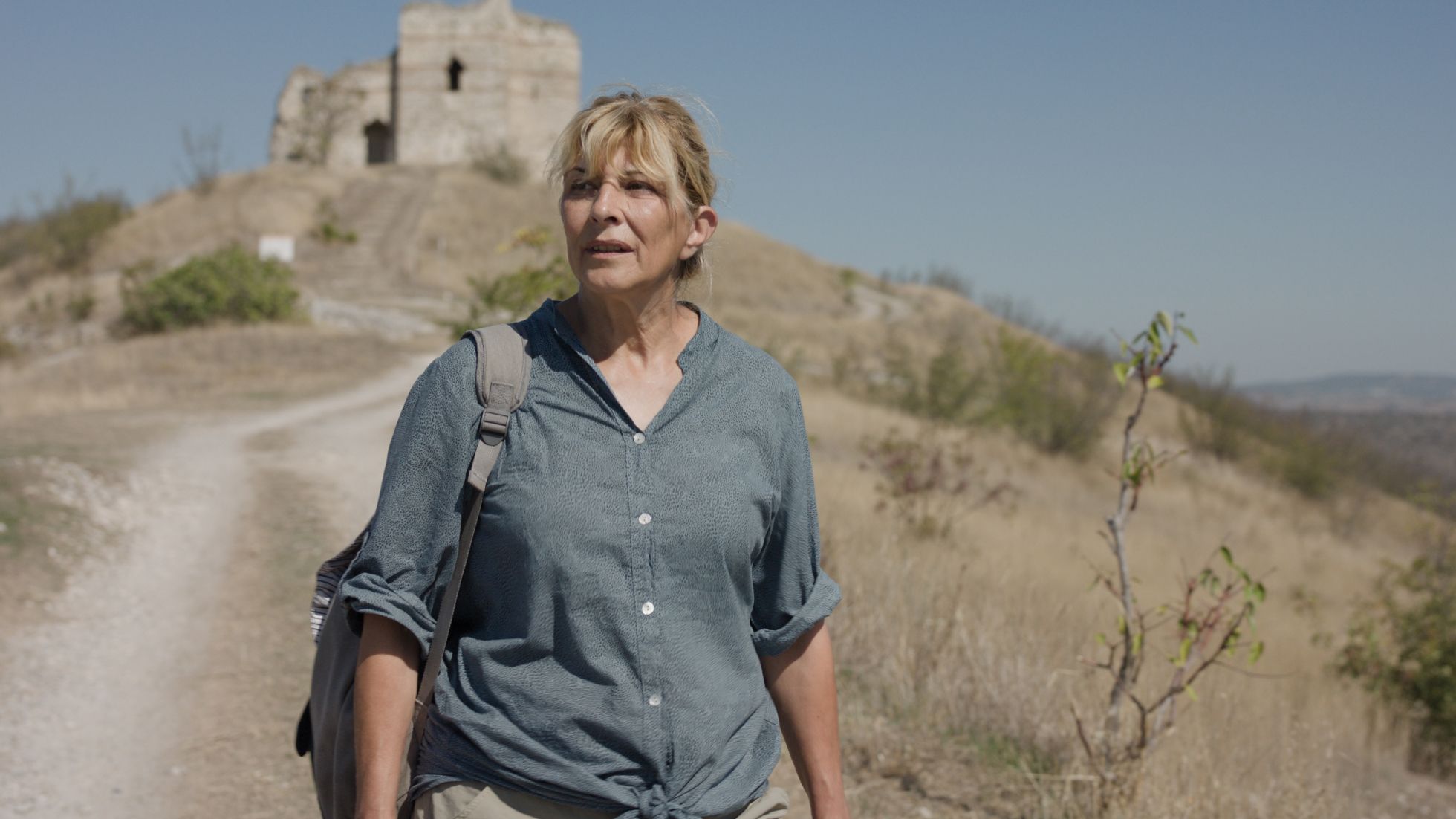
Another non-standard film was made by the wonderful director of the “Berlin School” Valeska Grisebach with the production participation of Maren Ade ( “Toni Erdmann” ).
As in the acclaimed previous film with the self-explanatory title "Western", Grisebach productively rethinks the genre with the help of non-professional actors and filming, the authenticity of which is impressive. No wonder the preparation and writing of the script took eight years. Grisebach herself calls reality the sparring partner of fiction.
This time she dissects the genre of adventure film novel. The action takes place on the border between Bulgaria and Turkey, west and east. Once upon a time, the Silk Road passed here, through the inconspicuous town of Svilengrad.
Veska is a strong-willed and independent leader of an archaeological expedition. One day the excavations have to be interrupted due to bad roads and broken down cars. Meeting an old acquaintance Said and falling in love with him again, Veska, who was born nearby, gradually plunges into the deep past - the 1990s: in those parts, apparently, they were also “dashing”.
Suddenly she finds herself involved in a criminal intrigue with smugglers, illegal immigrants and the charismatic boss of the local mafia, Ilya, who, like Said, was once infatuated with her. All participants in the love-adventurous triangle are about sixty, and least of all they look like the heroes of an action film.
Just as Veska peels away cultural layers one by one, getting to the shards of the deep past, so Grisebach peels off the superficial signs of adventure cinema, leaving only the feelings and fates of fearless characters. Moreover, at the center of events of his film, which is borderline in every sense, it places not a man, as the genre would require, but a woman.
“Coward” by Lucas Dhont (Belgium)
Best Actor Award for Emmanuel Macchia and Valentin Campagne
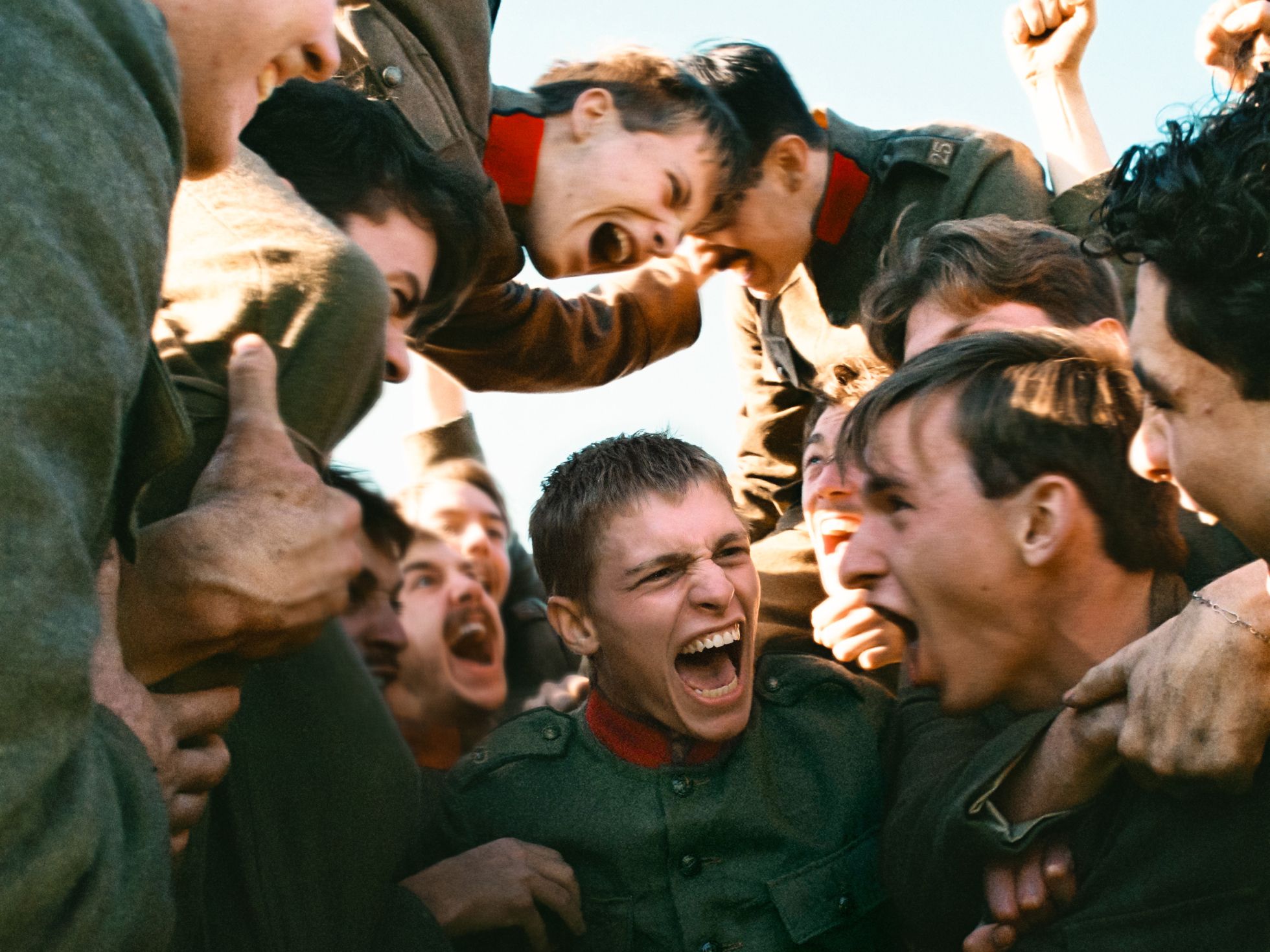
The young Belgian director, in unison with the Spanish Javiers, although clearly without agreement, builds the film’s conflict on the conflict of war, inextricably linked with coercion, and the desire for freedom, expressed in creativity and the search for sexual identity.
His heroes are young conscripts of 1914, sent to the front of the First World War. It doesn’t take them long to find themselves in the trenches and they manage to become friends before their baptism of fire, and at the same time come up with a common hobby: amateur theater.
The two central characters - the shy farmer Pierre and the more relaxed city dweller Francis, an apprentice from a tailor's shop - perform together on a makeshift stage, regularly trying on women's clothing. Gradually they fall in love with each other.
The sunny and idyllic coloring of this unusual war drama makes it similar to Alexander Zolotukhin’s “Russian Boy” : in fact, there are no horrors of war on the screen. The ideas of “The Coward” are equally noble and banal: fighting is bad, singing and acting in the theater is good, it is necessary to love, it is impossible to hate. The development and resolution of the intrigue allows us to draw analogies with Ang Lee's Brokeback Mountain.
The film language of “The Coward” may irritate because it is touching, and the pathos may seem too simple-minded, but it is difficult not to identify with the content of the film.
Anton Dolin