
Translated material
Love of the girl and her centennial neighbor
It is not necessary to talk about how Ali Smith is important for Ali Smith - this is already obvious. He builds a form here, creates an album inside which Smith carefully lays out a herbarium between the pages with photographs of some beautiful people, when they were still young, and now, obviously, not very young. Autumn of life is when you already understand that in this album you are so young and cool already the devil knows when, you can’t even remember even whether you are at all. Perhaps yes, perhaps you invented it - a deception of memory, another invented plot that never happened to you. How did you live this life, whom you loved that you loved?
Some people affect others - just as, for example, external circumstances, weather or phase of the moon affect people. In the focus of Ali Smith there are two: old Daniel and young Elizvet. Of the strange conversations about the strange, from nothing, friendship is born that scares Mom Elizvet. However, whose mother would not have scared the situation when the daughter spends time in the company of the old man, who does not seem to have everything at home? They, among other things, are connected by this: art. After some time, Elizvet will begin to study the history of art at the university, and as a thesis, the artist Polin Boti, which Daniel so often told her, chooses a little-worn pop art. The art is immortal - well, so -so thesis, but it is true: what will remain after you?
Many years later, lying in the Daniel hospital, even older, immobilized, constantly sleeping, continues to speak with Elizvet. Some things still remain unshakable (or seem like that). Following the “autumn”, “winter” came to the book regiments in Russia, and, probably, we will also see it next year on the list of Yasnaya Polyana. Well, this, in the end, could become a pleasant tradition.
Assessment: 7/10
Victoria Gorbenko , Telegram channel of the bookviki
"Autumn" really want to call the beaten "poem in prose." Moreover, on the first pages it seems that this will not be a compliment. In fact, Ali Smith simply does not fit in the usual terminology. No matter how you name its text, it will fall over the edge of this name. This is at the same time a dream, and thinking about this dream, and observation of a dream by a person who does not sleep. This is an attempt to show another angle of view, teach to ask other questions, tell about what no one notices. This is a work of art, exploring its own essence.
Roman Smith is airy, but she herself does not hide in the clouds. The text has a tangible framework - the relationship of the storage old man in a coma, and a thirty -two -year -old woman. Relations lasting twenty years, relationships, for which it is impossible to choose a word that does not surpass them. The text has a tangible temporary framework tied to landmark events, whether it be a spy scandal around the “Profum case” or the tension created by Brexit. Naturally, the temptation appears to analyze the “autumn” in the usual political context, but events here are described through sensations, and not through facts. With common quote from Dickens, you can describe any times, it is important-to describe them in a new way, as no one has yet done, create your own collage, which will sprinkle for half a century in a barn, and then will be found with enthusiastic descendants. The text, in the end, has a clear goal of telling about a figure that is interesting to Ali Smith herself-Polin Boti, the only woman in the British pop art, the owner of a huge talent and a tragic fate. But here the writer shows delicacy, describing art through the impossibility of his exact description, trying to catch the elusive beauty without destroying it.
At first it is thought that “Autumn” is just a book about fading, sluggish dying, regrets of unfulfilled, with the shots of empty benches in the imagination, powdered by foliage of alleys, angry on the roof of the rain and other melancholic banalities. But, it turns out that “Autumn” is a book that it is still a long time before the winter, and there is still a lot of time to love and create time. Despite the fact that the usual world collapses and new boundaries are grinned with two rows of barbed wire.
Read: if you have not found time to call someone important for a long time.
Do not read: if you like specifics, but from poetry it brings your teeth.
Assessment: 8/10
Vladimir Pankratov , Telegram channel "Stonener"
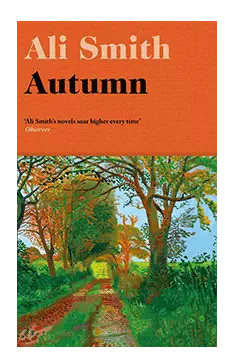 I don’t know for sure why this novel got into the short list of “Boker” in 2017, but my personal answer is: “Autumn” is the most adequate literary description of the time in which we live. In other words - here it is, an ideal modern novel that not only register the phenomena of a new life, but also conveys the “spirit of the era”, even if this era fit only in the last five -year plan. And in the language, structure and organization of the text, it is, as it were, the product of the era itself.
Formally, the autumn drew in the title follows the summer when in the UK voted for Brexit, and the author shows the universal confusion that followed the referendum. In parallel, the writer develops a fascinating love story of a 30-year-old girl and her centenary neighbor, against which any referendums seem ephemeral fuss. It is in our days that reality generally became monstrously ephemeral - and this, perhaps, is the main thing that Smith fixes. Ephemeral news from television; Ephemeral time, which still walks in a circle, thereby leveling the value of each moment; ephemeral memories; Ephemeral language that we communicate today. Smith writes an ephemeral novel, which is entirely consisting of barely perceptible scenes, which quickly evaporate and give way to the following. The only thing that is not ephemeral is love and art, which connect a strange couple of the main characters.
Who to advise to read this? Yes to everyone. "Autumn" is not a manifesto for or against modern realities. This is a novel showing that literature does not have to “lag behind” from reality in order to react to it; demonstrating that literature is able to “process” any innovations in a person’s life - and at the same time remain the good old literature with an interesting plot, healthy irony and dialogues, like the scriptwriters. The case when I read a 200-page book, and the feeling that he lived-with pleasure-all six hundred.
Assessment: 9/10
General assessment: 7.75/10
Recall that “Gorky” repeatedly wrote about “Autumn”.
Here , for example, Anastasia Zapozova wrote about the novel.
Or read about the book in Lisa Birger.
And here is another review of the "autumn" by Vladimir Pankratov.
* * *
Recall of other books from a long list of the Yasnaya Polyana prize in the nomination "Foreign Literature":
Jonathan COU "Middle England" - 8.5/10
Dan Simmons "Terror" - 8.25/10
Richard Russo Empire Falls - 8.25/10
Oygen Ruga "Days of Decreasing Light" - 8.2/10
Viet Tan Nguyen "Sympathetic" - 8/10
John Boyn "History of Loneliness" - 7.75/10
Syuw "Skugga-Baldur" -7.6/10
Kolm Toybin "House of Names" - 7.5/10
Ernan Rivera Letelier “The Art of Resurrection” - 7.5/10
Julian Barnes “One History” - 7.4/10
George Saunders "Lincoln in Bardo" - 7.25/10
Evelyio Rosero "War" - 7.25/10
Robert Menassa "Capital" - 7.25/10
Celeste ING "And fires smolder everywhere" - 7/10
Olga Tokarchuk "Runners" - 7/10
Neil Mukerji "Status of Freedom" - 7/10
Eka Kournian "Beauty is Woe" - 6.6/10
Maya Lunde "History of bees" - 6.25/10
Bi Fayyu "Chinese massage" - 6/10
Masachiko Simada “Canon, sounding forever” - 5.75/10
Whether the son of the "secret life of plants" - 5.4/10
Anne Patettt "Belcanto" - 5.4/10
Kristina Dalcher "Voice" - 4.25/10